
Quick Answer
Reiki and related energy healing techniques can genuinely help calm the body during and after a panic attack, mainly through slow breathing, grounding, and the physical effect of a calm, attentive presence on your nervous system. They do not stop an attack from starting, and they are not a treatment for panic disorder on their own. Used alongside proper medical or mental health care when that is needed, many people find a Reiki session, or even just a few grounding techniques borrowed from it, genuinely useful for shortening an attack and building a steadier baseline over time.
Key Takeaways
- Reiki cannot prevent a panic attack from starting, but the grounding and breathing work used in a session can shorten how long one lasts.
- Energy healing mainly works on the body’s relaxation response, not on the specific thought patterns or triggers behind panic disorder, which is usually a job for therapy.
- A regular practice, weekly or every couple of weeks, tends to lower someone’s general anxiety baseline over a few weeks, even on days nothing in particular is wrong.
- Simple grounding tools, the 5-4-3-2-1 technique, slow counted breathing, a hand pressed flat against the chest, can be used the moment panic starts rising, with or without a practitioner on the call.
- Frequent or severe panic attacks, especially ones with chest pain or real trouble breathing, need a doctor’s evaluation first, so anything physical gets ruled out before treating it as anxiety alone.
- Sandeep Jain treats panic-attack-related sessions as complementary support and says plainly when something sounds like it needs a therapist or physician instead.
What Actually Happens in the Body During a Panic Attack
A panic attack is your body’s alarm system firing at full volume when there is no actual danger in front of you. The heart races, breathing gets short and shallow, the chest tightens, hands might go cold or tingly, and a lot of people describe a wave of dread that feels like something is seriously wrong, even dying. This is adrenaline and the sympathetic nervous system doing exactly what they are built to do, just at the wrong moment and for no clear reason. The National Institute of Mental Health describes panic disorder as recurring, unexpected panic attacks along with a persistent fear of having another one, which is often what turns an isolated bad episode into something that shapes a person’s whole week (nimh.nih.gov).
Most attacks peak within about ten minutes and ease off within half an hour, even without anyone doing anything, but that window can feel endless when you are in it. The physical sensations are real, not imagined, which is part of why panic attacks are so disorienting. Your body is responding as if you were actually in danger. Nothing about that is a character flaw or a sign of weakness, whatever the inner voice says in the moment.
Where Reiki Can Actually Help, and Where It Cannot
Reiki works through focused attention, light or near-body touch (adapted to a hand-on-heart gesture or simple visualization during an online session), and slow, guided breathing, all of which nudge the body toward its parasympathetic, rest-and-digest state instead of the sympathetic fight-or-flight one that a panic attack runs on. That shift is physiological, not purely psychological. A slower heart rate and longer exhale genuinely do change what is happening in the body, regardless of what you believe about energy work as a concept.
What Reiki does not do is interrupt the underlying trigger. If someone’s panic attacks come from a specific trauma, an anxiety disorder, a medical condition like a thyroid issue, or a medication side effect, Reiki is not going to resolve any of that on its own. Sandeep is direct about this with clients: a session can calm the nervous system in the moment and help build general resilience over weeks, but it is not a substitute for therapy, psychiatric care, or a doctor’s workup when panic attacks are frequent, severe, or new. He has had more than one conversation steering a client toward a GP or a psychologist first, and toward energy work as something to layer on afterward, not instead.
Grounding Techniques You Can Use in the Moment
Several of the tools Sandeep teaches during a panic-focused session are things a person can use alone, at 2am, with no appointment required. The 5-4-3-2-1 technique is one of the most reliable: name five things you can see, four you can touch, three you can hear, two you can smell, and one you can taste. It sounds almost too simple to matter, but it pulls attention out of the racing thought loop and back into the room, which is often enough to take the edge off the worst of it.
Slow counted breathing helps for a related reason. Inhaling for four counts, holding for four, and exhaling for six or longer sends a direct signal to the vagus nerve that it is safe to stand down. A hand pressed flat against the chest or sternum, just applying gentle, steady pressure, does something similar for a lot of people, almost like a weighted blanket for the upper body. None of these require believing in anything. They are nervous-system mechanics, and Reiki sessions simply build a calmer frame of mind around practicing them.
What an Online Session Focused on Panic and Anxiety Looks Like
A first session usually opens with a real conversation, not a script. Sandeep asks what the attacks tend to feel like, how often they show up, whether anything predictable triggers them, and what has already been tried. As a certified hypnotherapist and Reiki Grand Master trained through BSH and GHSC-UK, he treats that intake seriously, partly because panic-attack clients often arrive exhausted from having explained themselves badly to people who did not take it seriously.
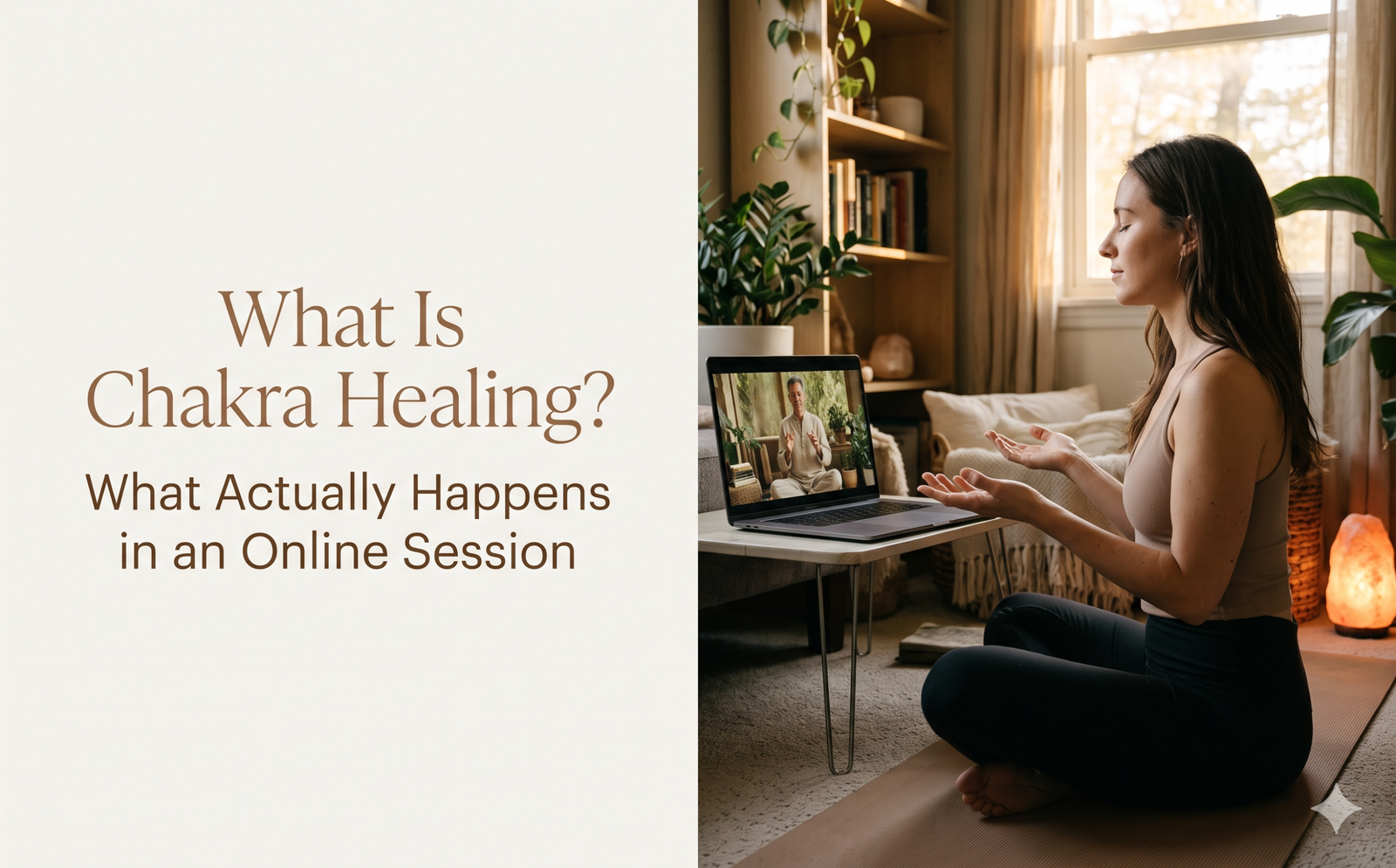
From there, the session moves into guided breathing and Reiki, delivered over video call with the client settled somewhere quiet and comfortable. There is no physical touch involved online, obviously, but clients regularly describe a real drop in tension, warmth in the hands or chest, or simply the first properly slow exhale they have had in days. The session closes with a short debrief and, usually, two or three specific things to practice between now and whenever the next one happens, built around whatever actually triggered that person’s attacks rather than a generic handout.
Frequently Asked Questions
Can Reiki stop a panic attack while it is actually happening?
It can help shorten and soften one, mainly through breathing and grounding, but it will not switch it off instantly the way flipping a light switch would. Most people notice the physical intensity easing within a few minutes of focused breathing and calm presence, whether that comes from a practitioner or from practicing the same tools alone.
How is this different from Reiki for general anxiety or stress?
The mechanics overlap a lot, but a panic-focused session spends more time on in-the-moment tools you can use during an actual attack, rather than the slower, cumulative stress relief that a general anxiety and emotional overwhelm session is built around. Both fall under the same broader practice, just with a different focus depending on what someone actually needs that week.
Is it safe to rely on grounding techniques instead of seeing a doctor?
Grounding techniques are safe to try on their own, but they are not a substitute for a medical evaluation if panic attacks are new, frequent, or come with chest pain, fainting, or real shortness of breath. Those symptoms deserve a doctor’s attention first, since several medical conditions can mimic panic attacks closely enough that it is worth ruling them out.
How many sessions would someone need for panic attacks specifically?
There is no fixed number. Some people notice a real difference in general anxiety after two or three sessions spaced a week or two apart, while others keep a longer-term weekly or biweekly rhythm simply because it keeps their baseline lower. It depends on how long the pattern has been established and what else is going on.
Can this be done over video call during an actual panic attack in progress?
In theory yes, though in practice most people reach for the grounding tools themselves in the moment rather than trying to book a call mid-attack. Sessions are more commonly used proactively, to build the skills and calmer baseline that make attacks less frequent and less intense over time, with grounding techniques as the thing you actually use in a live moment.
Does energy healing replace therapy or medication for panic disorder?
No. Panic disorder is a recognized mental health condition, and anyone dealing with recurring, disruptive panic attacks should be working with a doctor or therapist as the primary line of care. Reiki and grounding work sit alongside that kind of treatment as complementary support, never as a replacement for it.
If panic attacks or ongoing anxiety are something you are dealing with regularly, it might help to look at the Emotional & Psychological Support sessions Sandeep offers, or read a closer look at how online hypnotherapy fits into an anxiety-management plan when other approaches have not quite landed. When you are ready, you can book a session directly and talk through what would actually help.
About the author: Sandeep Jain is a certified hypnotherapist and Reiki Grand Master based in Gurgaon, trained through BSH and GHSC-UK, offering online hypnotherapy and Reiki sessions to clients across Delhi NCR and the rest of India.