Quick Answer
Chakra healing works from the idea that seven energy centers run from the base of your spine to the crown of your head, and that each one connects to specific physical, emotional, or mental patterns. A session usually combines guided relaxation with focused energy work, often Reiki, directed at whichever centers feel blocked or overactive, followed by a short conversation about what came up. It can be done entirely online over video call. It is not a diagnosis or a replacement for medical or mental health treatment, but many people use it alongside those things to feel steadier and more grounded.
Key Takeaways
- Chakra healing is built on a seven-center energy model, each one tied to a different area of life, from physical security to self-expression to intuition.
- A typical online session runs 45 to 60 minutes: a short consultation, guided relaxation, focused energy work, and a debrief at the end.
- You do not need to see, feel, or believe in energy in any particular way to notice something from a session. Most people describe physical relaxation and a quieter mind rather than anything dramatic.
- Chakra work is complementary care, not a clinical treatment. It sits alongside medical or mental health support, not in place of it.
- One session can ease tension in the moment, but a recurring pattern (chronic anxiety, persistent low energy) usually takes two or three sessions spaced a week or two apart before anyone notices a real shift.
- Sandeep Jain treats chakra balancing as one tool inside a broader Reiki practice, not a stand-alone gimmick, and will say plainly when a concern needs a different kind of support first.
What the Seven Chakras Actually Are
The chakra system comes out of yogic and tantric traditions in India that are well over a thousand years old, long before “energy healing” became a wellness category on the internet. The basic model maps seven main centers along the spine: root, sacral, solar plexus, heart, throat, third eye, and crown. Each one is associated with a cluster of themes rather than a single organ or symptom. The root chakra is linked to safety and stability. The sacral chakra to creativity and emotional flow. The solar plexus to confidence and personal power. The heart to connection and compassion. The throat to honest communication. The third eye to clarity and intuition. The crown to a sense of meaning beyond the day-to-day.
None of this maps onto anatomy the way a medical textbook would. It is a framework, not a diagnosis. What Sandeep tends to tell new clients is that the value of the chakra model is less about proving it exists in a measurable way and more about giving language to patterns people already sense in themselves, like always feeling unsafe no matter how stable their life actually is, or struggling to say what they mean even when they know exactly what that is.
What Happens During an Online Chakra Healing Session
A first session with Sandeep usually opens with ten or fifteen minutes of conversation. He asks what brought you in, what has been going on physically and emotionally, and whether anything in particular feels “off” or heavy. This part matters more than people expect. Chakra work that ignores context tends to feel generic, and Sandeep has been doing this long enough (as a certified hypnotherapist and Reiki Grand Master, trained through BSH and GHSC-UK) to know that the conversation is often where the real information shows up.
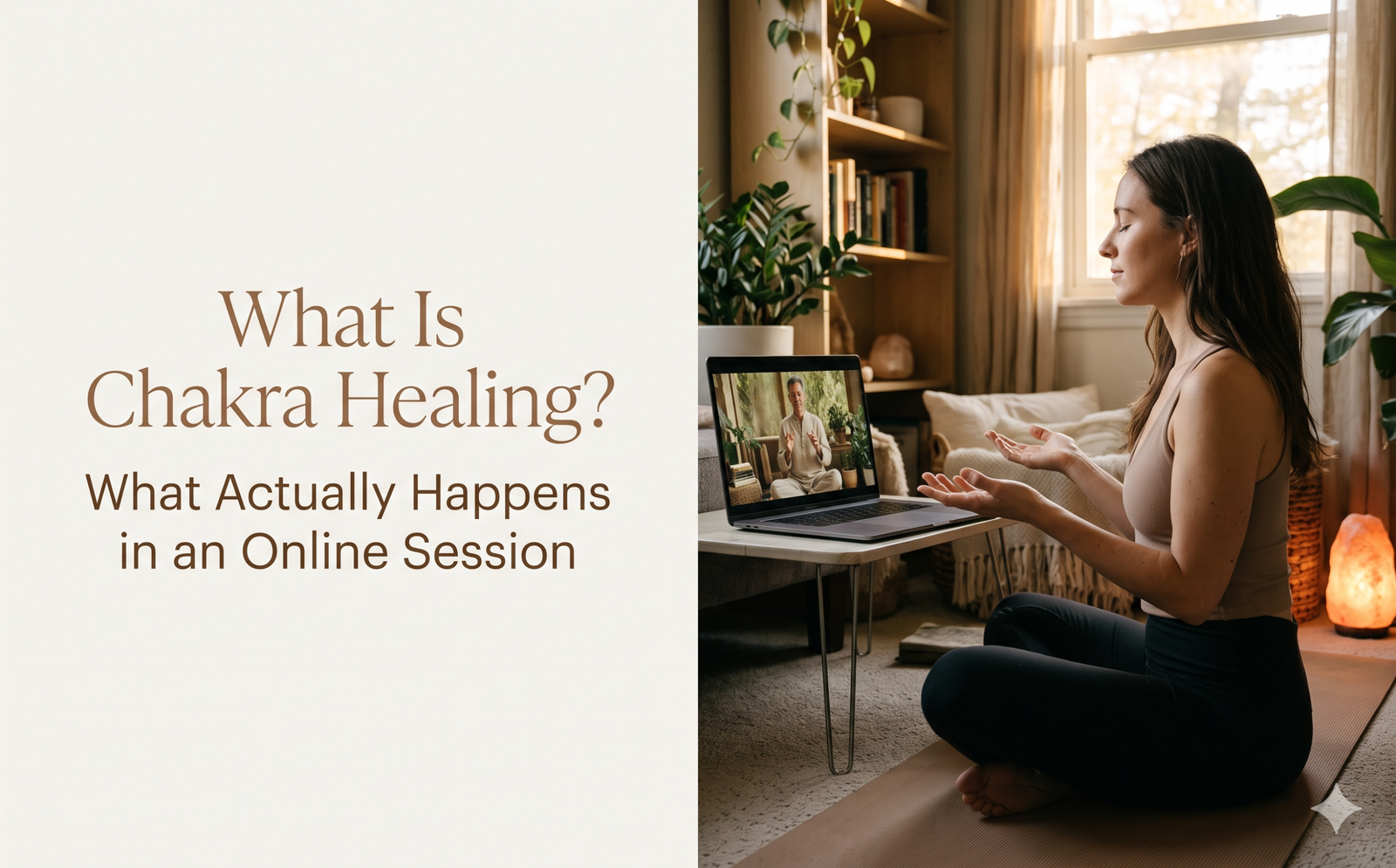
After that, you settle into a comfortable position at home, camera on or off depending on your preference, and close your eyes. Sandeep works through the chakras using focused Reiki and guided visualization, describing what he is sensing and checking in periodically. There is no touch involved online, obviously, but clients often report the same kind of warmth or tingling they would expect from an in-person session, which is one of the more interesting and least explainable parts of distance energy work. The session usually closes with a few minutes of integration, where he shares what came up and what he would suggest doing between now and a follow-up, if one is useful.
Most people leave with practical homework, not vague advice. That might be a specific breathing pattern tied to the chakra that felt most affected, or a short daily check-in practice, or simply paying attention to a particular pattern over the next week.
How Do You Know If a Chakra Feels Out of Balance?
People usually arrive at a chakra session already sensing something, even if they cannot name it precisely. Common patterns include constant low-grade anxiety that does not track to anything specific (often read as a root chakra theme), difficulty setting boundaries or saying no (solar plexus), feeling disconnected from people even when you want closeness (heart), or chronically holding back what you actually think in conversations (throat). If any of that sounds familiar and you want a more detailed symptom-by-symptom breakdown, 7 Signs Your Chakras Are Blocked (and How an Online Healing Session Can Fix It Fast) goes through this in more depth.
It is worth being honest here: these patterns overlap heavily with ordinary stress, poor sleep, and plain bad weeks. Chakra language can be a useful lens for noticing a pattern, but it should not be the only lens you reach for, especially if something feels persistent or severe.
Does Chakra Healing Actually Do Anything?
This is the fair question, and it deserves a fair answer rather than a sales pitch. Controlled research on chakra systems specifically is thin. What does exist in the broader category of biofield and energy-based therapies, including Reiki, shows some evidence for reduced perceived stress and improved relaxation in small studies, though the U.S. National Center for Complementary and Integrative Health (NCCIH) is careful to note that the overall evidence base is still limited and methodologically mixed (nccih.nih.gov). That is a more honest summary than most wellness sites will give you.
What Sandeep generally sees in his own practice, for whatever that is worth against formal research, is that the relaxation response itself, slower breathing, a drop in that wired feeling, a sense of being listened to, does real and measurable things to how someone feels afterward, whatever label you put on the mechanism. Beyond Placebo: What Happens to Your Brain and Biofield During a Reiki Session digs into that question in more detail if you want the fuller picture.
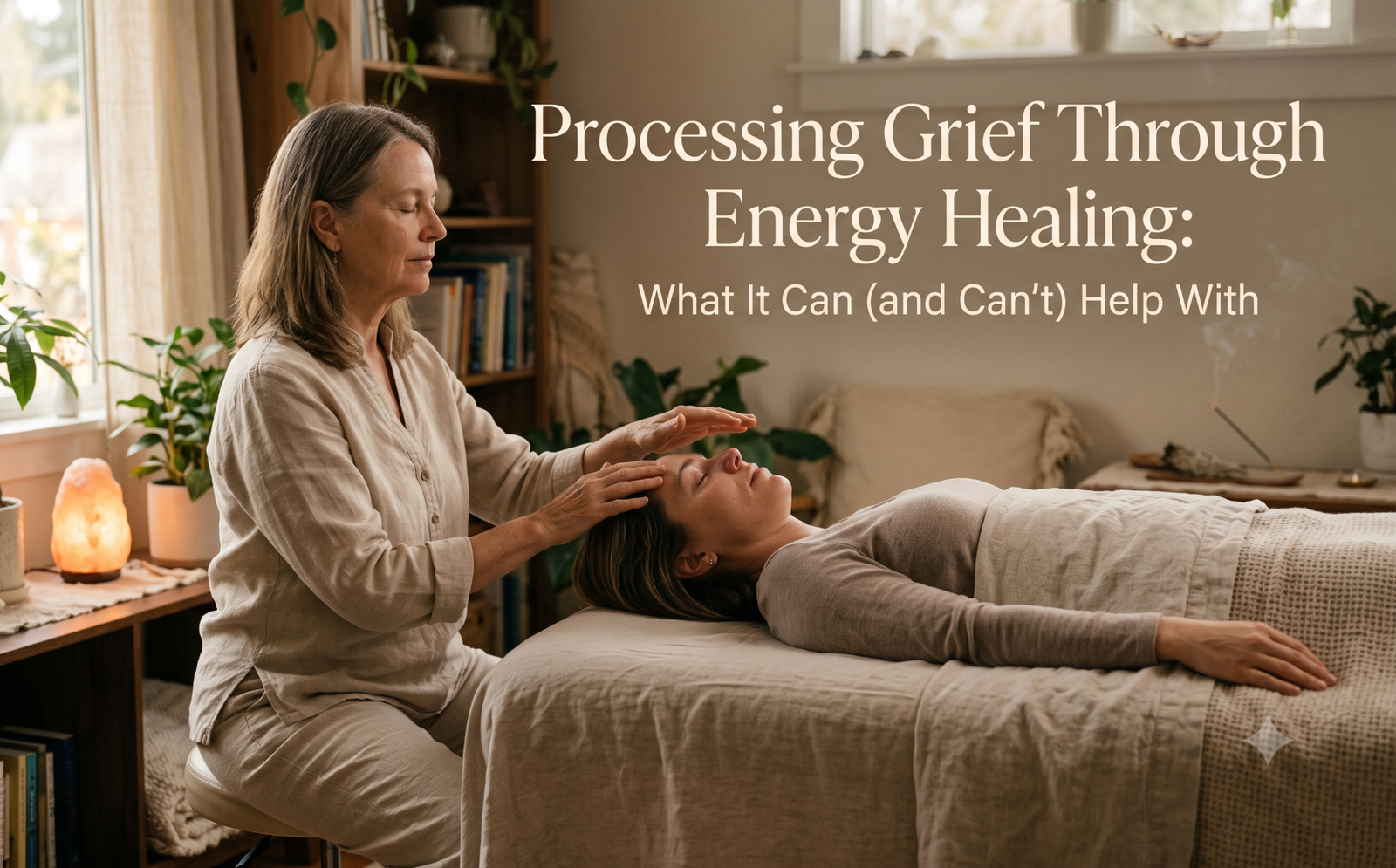
The hedge matters, so it is worth saying plainly: chakra healing is complementary care. It is not a treatment for diagnosed physical or mental health conditions, and if you are managing anxiety, depression, or a medical issue, this works best as something alongside your existing care, not instead of it.
Frequently Asked Questions
How long does a chakra healing session take?
Most online sessions with Sandeep run 45 to 60 minutes, including the initial conversation and a short debrief afterward. First sessions sometimes run slightly longer since there is more context to cover.
Can chakra healing really be done online, or does it need to be in person?
It can be done fully online over video call. Energy work does not require physical proximity in the way a massage or acupuncture session would, and many clients across Delhi NCR and beyond work with Sandeep this way specifically because it fits their schedule better than traveling for an in-person appointment.
Is chakra healing backed by scientific evidence?
Direct research on chakras specifically is limited. Broader research on related biofield and relaxation-based therapies shows some evidence of reduced stress and better relaxation, though major health bodies like the NCCIH describe the overall evidence as still developing. Treat it as a complementary practice, not a clinically proven treatment.
How many sessions do I need before I notice a difference?
A single session can ease tension in the moment, which is often enough if what you are dealing with is situational. A longer-standing pattern, like chronic low energy or persistent anxiety, usually takes two or three sessions spaced a week or two apart before most people notice a real shift.
What should I expect to feel during a session?
Reactions vary. Some people feel warmth, tingling, or heaviness in specific areas. Others feel mostly just deeply relaxed, the way you might after a good nap. Neither response means it worked better or worse. It is not a test you can pass or fail.
Can chakra healing replace therapy or medical treatment?
No, and it should not be positioned that way. It works well as a complementary practice alongside therapy, medical care, or both, not as a substitute for either. If you are dealing with a diagnosed condition, keep your existing care in place and treat this as additional support.
If you have been feeling out of sync in a way you cannot quite pin down, exploring the Chakra Healing & Balancing service page is a reasonable next step, and you are welcome to book a session directly if you would rather just try it and see what comes up.
About the author: Sandeep Jain is a certified hypnotherapist and Reiki Grand Master based in Gurgaon, trained through BSH and GHSC-UK, offering online hypnotherapy and Reiki sessions to clients across Delhi NCR and the rest of India.