Reiki vs. Meditation: Which One Do You Actually Need?
Quick Answer
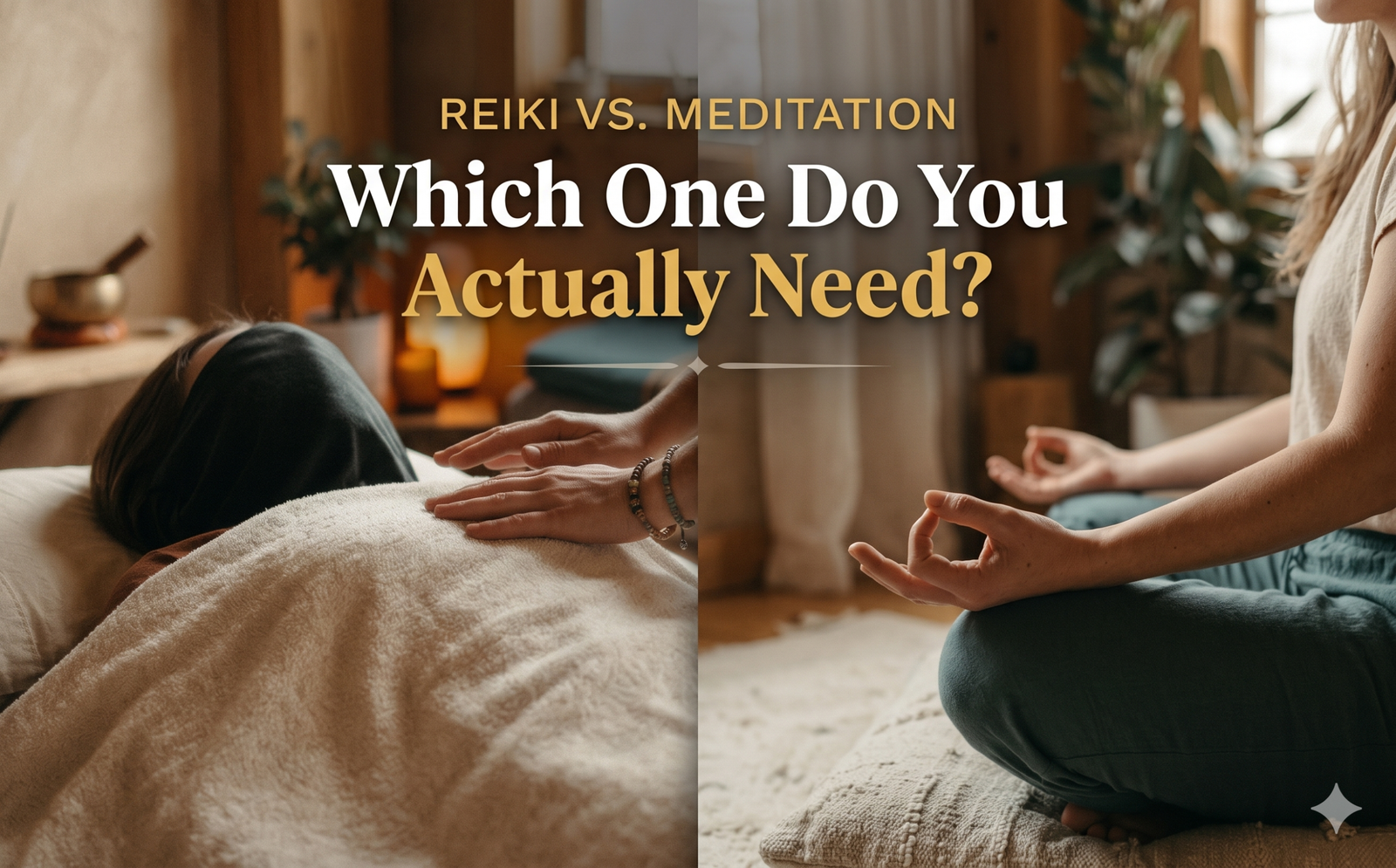
Reiki is a hands-on (or hands-near, in a distance session) energy healing practice where a trained practitioner directs healing energy into your body while you simply rest. Meditation is something you do yourself, training your own attention and awareness, usually through breath or a focal point. If you want a guided, deeply relaxing experience you can receive passively, especially when you’re too wound up to sit still with your own thoughts, Reiki tends to work better. If you want a daily self-practice that builds long-term mental resilience and costs nothing once you learn it, meditation is usually the better starting point. Many people in Gurgaon and across Delhi NCR end up using both, for different parts of the same problem.
Key Takeaways
- Reiki is received from a practitioner; meditation is a skill you practice yourself.
- Reiki tends to help faster with acute overwhelm; meditation builds a slower, more durable baseline of calm.
- Meditation is free once learned; Reiki involves an ongoing session cost, whether online or in person.
- Reiki does not require any skill or effort from you during the session; meditation asks for consistent practice to see results.
- Neither replaces medical or mental health treatment. Both work best as complementary support alongside it, not instead of it.
- Combining both, a Reiki session when you’re overwhelmed and a short daily meditation habit in between, is common and often works better than picking just one.
What Reiki Actually Is (and Isn’t)
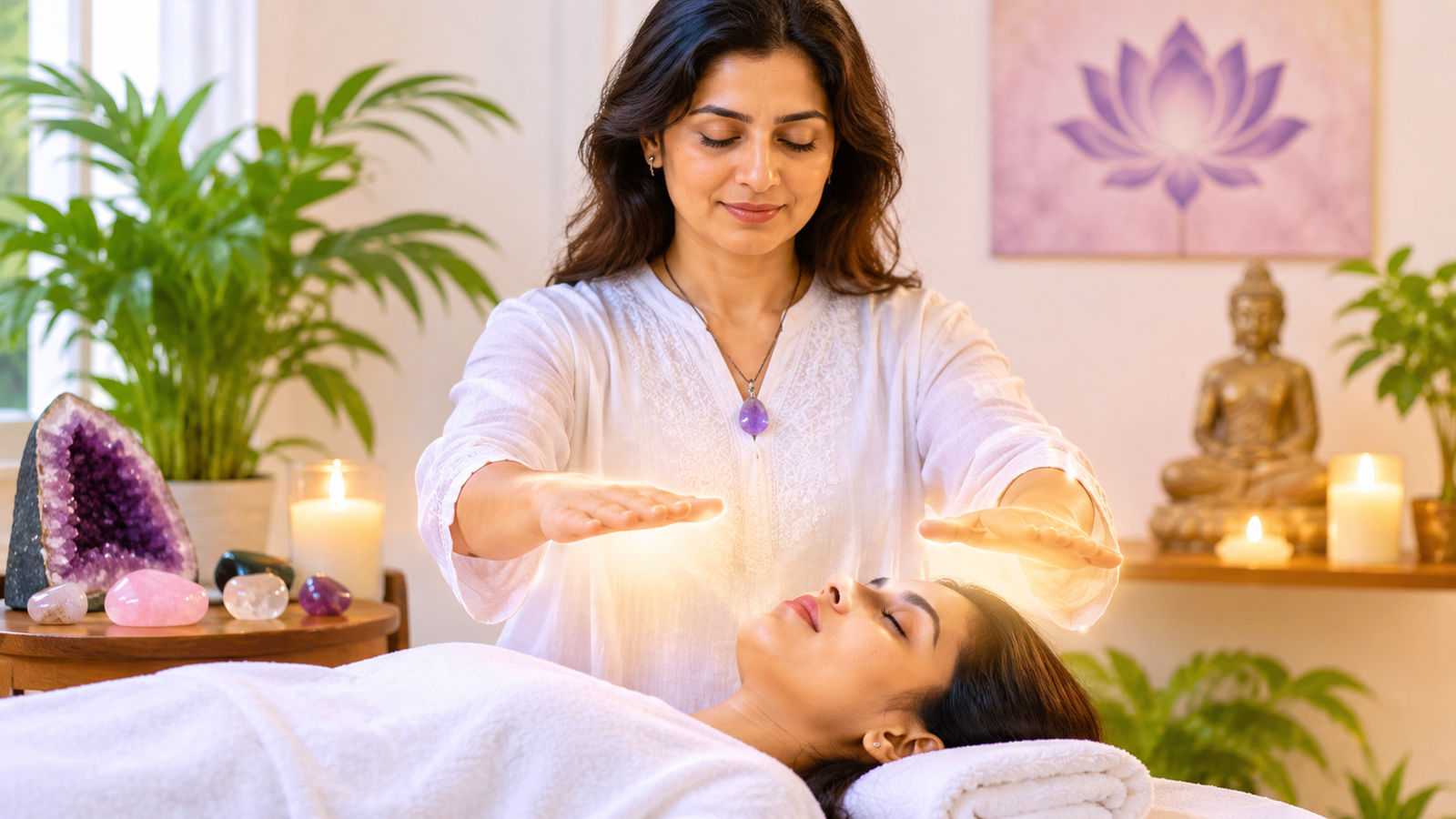
Reiki is a Japanese energy healing technique where a practitioner channels healing energy into your body, either through light touch or, in an online session, through intention directed at you from a distance. You don’t do anything. You lie down, close your eyes, and let the session happen. Most people describe a warmth or tingling sensation, a heaviness in the limbs, and a kind of mental quiet that’s hard to produce on your own when your mind is racing.
What Reiki isn’t is a form of massage, a religious practice, or a medical treatment. There’s no manipulation of muscle or tissue, no requirement to follow any particular belief system, and no claim that it cures a diagnosed condition. It’s a complementary relaxation and stress-support practice, and any practitioner who tells you otherwise is overselling it. You can read more about what an online Reiki healing session actually involves before deciding if it’s the right fit.
In a typical session with Sandeep Jain at Blessings Revitalize, a Reiki Grand Master and certified hypnotherapist (BSH, GHSC-UK) with years of practice across Delhi NCR and online clients throughout India, the session runs 45 to 60 minutes. You talk briefly about what’s going on for you, then you rest while the energy work happens, then you talk again about what came up. No effort is asked of you in the middle part, which is exactly why people who are too anxious or exhausted to meditate often find Reiki easier to start with.
What Meditation Actually Is (and Isn’t)
Meditation is a self-directed practice of training attention, usually by anchoring it to the breath, a sound, or a sensation, and gently returning to that anchor every time the mind wanders off. There are dozens of styles (focused attention, body scan, mantra-based, open awareness) but they all share that core structure: you do the work, repeatedly, and the benefit compounds over weeks and months rather than arriving in one sitting.
Meditation isn’t a quick fix, and it isn’t passive. The first few weeks are often uncomfortable, because sitting with your own mind without a distraction is harder than it sounds, especially if you’re already stressed. The research backing is also broader and older than Reiki’s: the U.S. National Center for Complementary and Integrative Health has published reviews finding meditation programs associated with modest but real reductions in anxiety, depression, and pain symptoms across multiple trials (NCCIH, “Meditation and Mindfulness: What’s the Evidence”). That doesn’t mean it works instantly, and it doesn’t mean it’s the right fit for every situation, but the evidence base for a basic breath-focused meditation habit is more extensive than it is for most complementary energy practices.
If you’re trying to decide between the two for a specific situation you’re currently dealing with, it helps to talk it through rather than guess. You can book a short online consultation with Sandeep and he’ll tell you honestly which one (or both) actually fits what you’re describing, instead of just selling you a session.
Reiki vs. Meditation: Where They Actually Differ
| Factor | Reiki | Meditation |
|---|---|---|
| Who does the work | A trained practitioner, while you rest | You, every single time |
| Effort required from you | Minimal, mostly showing up and relaxing | Consistent daily or near-daily practice |
| Typical cost | Per-session fee, ongoing if you continue | Free once learned, or a one-time course fee |
| Speed of noticeable effect | Often within one session | Usually weeks of regular practice |
| Best suited for | Acute overwhelm, exhaustion, needing to be held through something | Building long-term baseline calm and self-regulation |
| Can be done alone | No, needs a practitioner (in person or distance) | Yes, entirely self-directed |
Neither of these is a ranking of which is “better.” They sit in different parts of a person’s toolkit, and plenty of my clients use one for crisis moments and the other as a standing daily habit.
When Meditation Is the Better Fit
If what you’re dealing with is a slow-burning, everyday kind of stress, the sort that shows up as a tight jaw, shallow breathing, and a mind that won’t switch off at 11pm, meditation is usually the more cost-effective long-term answer. It’s free, it’s available the moment you want it, and the skill you build compounds. Ten minutes a day for two months changes your baseline in a way a single Reiki session, however good, generally can’t on its own.
Meditation also tends to suit people who like having direct control over the process. If the idea of lying still while someone else “does something” to your energy field feels uncomfortable or hard to trust, that discomfort is itself a signal that meditation, where you stay fully in the driver’s seat, is the more natural entry point for you.
When Reiki Is the Better Fit
If you’ve tried to meditate and your mind simply won’t settle, if you’re in the middle of an acute stretch (grief, burnout, a breakup, a health scare) where sitting alone with your thoughts feels unbearable rather than calming, Reiki often works better precisely because it asks nothing of you. You’re not failing at it the way beginners often feel they’re failing at meditation. You just lie there and let the session carry you.
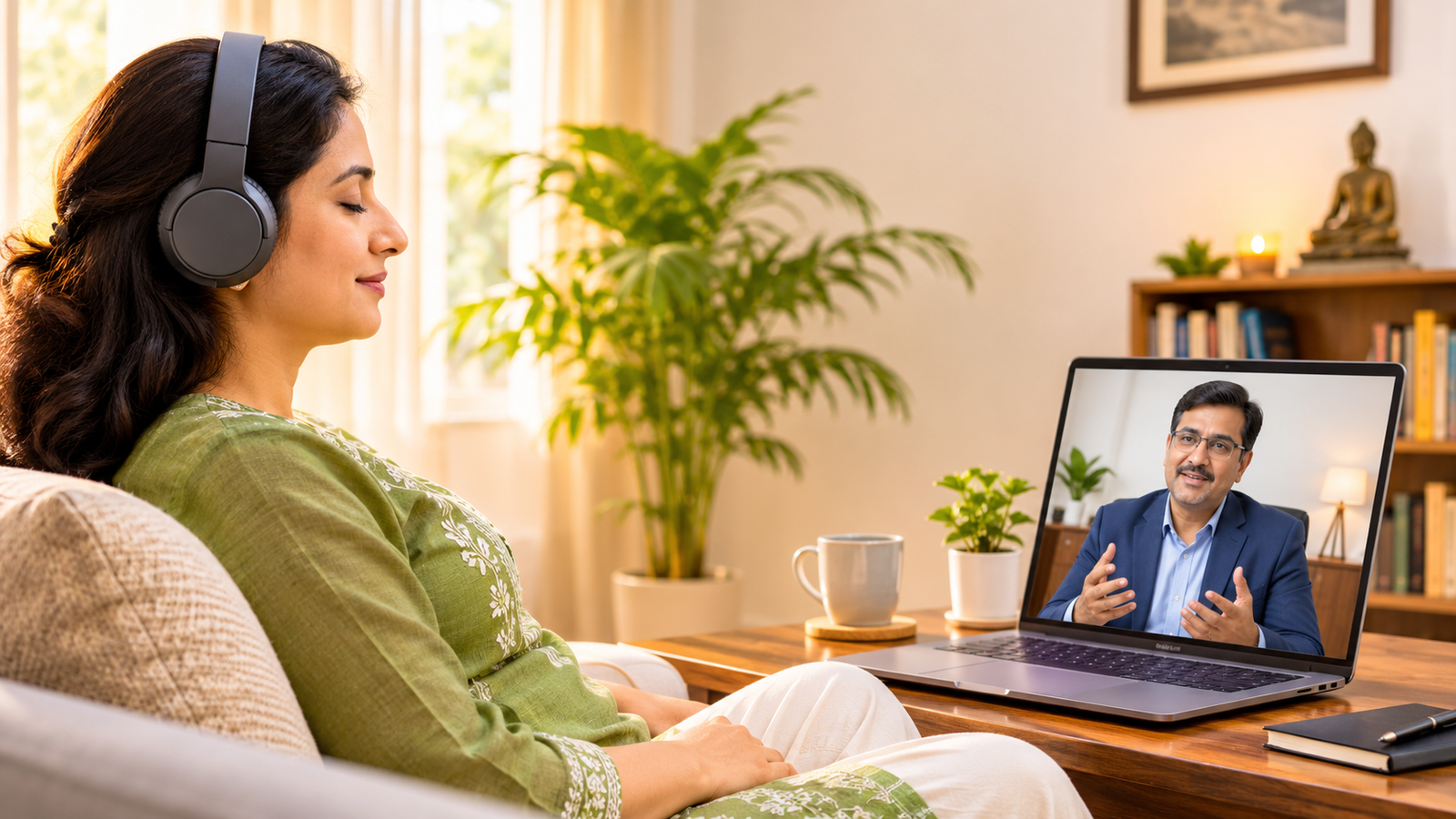
Reiki is also the better starting point for people who want a guided experience with another human present, even if that human is on a video call rather than in the room. Some of my clients across Noida and Faridabad specifically say the presence of a practitioner, even remotely, makes the stillness feel safe in a way solo meditation hasn’t yet. If you’re weighing the cost against the benefit, it’s worth reading the honest breakdown on whether Reiki is actually worth it before you book anything.
If none of this quite settles it for you on paper, that’s normal. It usually takes an actual conversation about what you’re dealing with to know for sure.
Can You Realistically Do Both?
Yes, and in practice this is the combination I see work best. A client dealing with work burnout might come in for a Reiki session during the acute weeks when they can’t settle enough to meditate, and then, once the edge has come off, start a short daily meditation practice to keep the baseline calm from sliding back. Reiki isn’t a substitute for building your own regulation skills, and meditation isn’t always accessible when you’re in genuine crisis. Used together, they cover each other’s gaps.
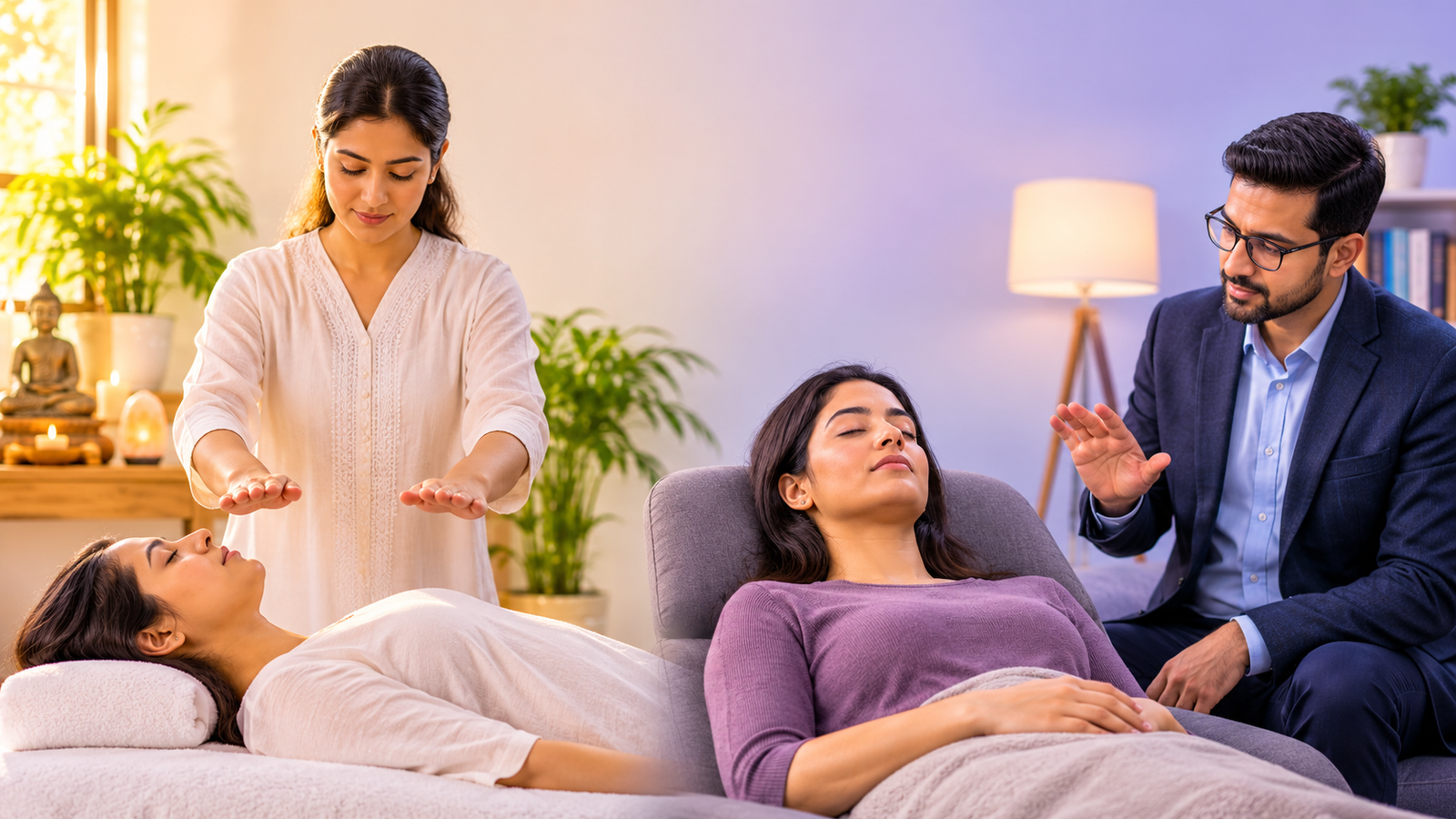
One honest caveat: neither Reiki nor meditation is a replacement for medical or mental health treatment. If you’re dealing with a diagnosed anxiety disorder, depression, or any condition under a doctor’s or therapist’s care, both of these sit alongside that care as complementary support, never instead of it. If you’re not sure which camp your situation falls into, that’s worth raising directly with your practitioner before you start either one. And if what you’re really deciding is between energy work and talk therapy rather than meditation, the comparison in Reiki vs. therapy covers that specific question in more depth.
Frequently Asked Questions
Is Reiki basically the same thing as meditation?
No. Meditation is something you actively practice yourself. Reiki is something a practitioner does for you while you rest. They can produce a similar felt sense of calm afterward, but the mechanism and the effort required are completely different.
Can Reiki help me if I’ve never been able to meditate?
Often, yes. A lot of people who find meditation frustrating because their mind won’t settle actually do well with Reiki, precisely because it doesn’t require you to quiet your own thoughts. You’re simply receiving the session.
Which one works faster, Reiki or meditation?
Most people feel something shift during or right after a single Reiki session. Meditation’s benefits are generally more gradual and build over consistent daily practice across several weeks, though some people do feel calmer after even one sitting.
Is it a waste of money to try Reiki if meditation is free?
Not necessarily. They solve different problems. If you’re in an acute stretch where you can’t meditate your way out of it, a Reiki session can be worth the cost precisely because it meets you where meditation can’t right now.
Do I need to believe in energy healing for Reiki to help?
No particular belief system is required. Plenty of clients come in skeptical and simply evaluate it by how they feel afterward. The relaxation response itself doesn’t require faith to work.
Can I do an online Reiki session and still meditate on my own?
Yes, and this is the combination described above. An online Reiki session works the same way a distance session always has, and there’s no reason it would interfere with a separate daily meditation habit.
If you’re still not sure which one actually fits what you’re dealing with, the fastest way to find out is to talk it through rather than guess from an article. Send Sandeep a message directly on WhatsApp and describe what’s going on. He’ll tell you plainly whether Reiki, meditation, or both make sense for you right now, before you spend a rupee.
Written with input from Sandeep Jain, Reiki Grand Master and certified hypnotherapist (BSH, GHSC-UK), founder of Blessings Revitalize, offering online Reiki healing and hypnotherapy sessions across Delhi NCR and India.