
Quick Answer
Reiki is worth it for most people if what you want is deep relaxation, lower day-to-day stress, and a calmer nervous system, and if you treat it as a complement to medical or mental health care rather than a replacement for it. It is not worth it if you are expecting a guaranteed cure for a diagnosed condition, since the scientific evidence for specific outcomes is still thin. At roughly the cost of a single therapy session or a massage, the real question isn’t whether Reiki “works” in a lab sense, it’s whether the relaxation response and the hour of undivided attention are worth that price to you.
Key Takeaways
- Reiki’s biggest, most consistently reported benefit is stress and anxiety relief, not the treatment of specific diseases.
- Scientific bodies like the NIH’s National Center for Complementary and Integrative Health say the evidence for Reiki remains limited and inconsistent, which matters when you’re deciding whether to pay for it.
- A single online session with an experienced practitioner in India typically runs far less than in-person therapy abroad, which changes the cost-benefit math considerably.
- Who you book with affects the outcome more than the modality itself. A poorly trained practitioner can make an hour feel pointless even if Reiki itself has value for you.
- Reiki should sit alongside your doctor or therapist, never instead of them, especially for anything diagnosed or serious.
- The clearest way to know if it’s worth it for you specifically is a short trial of two or three sessions rather than a single one-off.
People usually ask this question for one of two reasons. Either a friend swears by it and they’re curious but skeptical, or they’re already stressed, already tired of generic advice to “just relax,” and they want to know if spending money on an energy healing session is a reasonable use of that money. Both are fair starting points, and both deserve a straight answer rather than a sales pitch.
What You’re Actually Paying For
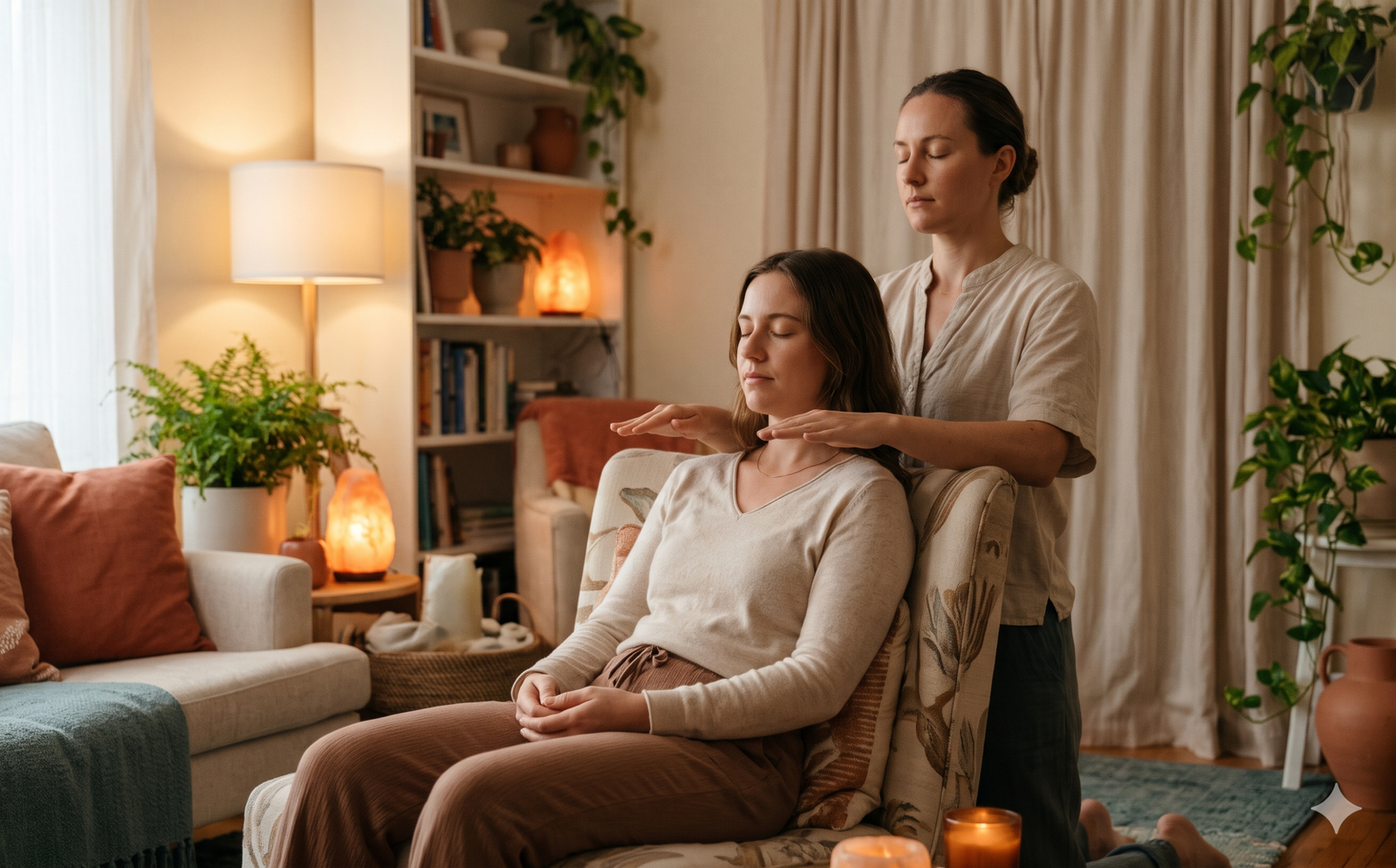
A Reiki session isn’t really a medical treatment you’re purchasing. It’s closer to buying an hour of focused, guided stillness, something most people in Delhi NCR and across India genuinely don’t get enough of. During a session, a practitioner channels what Reiki practice describes as universal life energy through light touch or near-body hand positions, while you simply lie down and breathe. There’s no equipment, no diagnosis, and no prescription. Our own online Reiki healing sessions run this way, whether you’re in Gurgaon or anywhere else in India with a stable internet connection.
In practical terms, that means the value is mostly in the outcome you walk away with: a slower heart rate, looser shoulders, a quieter mind for a few hours or days afterward. We’ve written in detail about what a session actually costs across India and what drives the price difference between a quick single session and a longer package, in our breakdown of Reiki and hypnotherapy session pricing in India, if you want the specific numbers before deciding anything.
What the Research Actually Says
This is the part most Reiki articles skip, and it’s exactly the part a cautious buyer should read first. The U.S. National Center for Complementary and Integrative Health, part of the NIH, has reviewed the available studies on Reiki and states plainly that Reiki hasn’t been clearly shown to be effective for any specific health-related purpose, and that there’s no scientific evidence yet for the energy field the practice describes. That’s not the headline a wellness business wants to lead with, but pretending otherwise would be dishonest, and dishonesty is exactly what makes this industry hard to trust.
What the same body of research does tend to support, even in lower-quality studies, is a real drop in self-reported stress, anxiety, and pain perception during and shortly after a session. That’s a smaller claim than “Reiki heals X,” but it’s also a more honest one, and it happens to match what most clients actually come back for. If you’re hoping Reiki will replace a cardiologist, a psychiatrist, or a course of physiotherapy, it won’t, and no responsible practitioner should ever suggest it will. Sessions here are offered as complementary support alongside your existing medical or mental health care, never as a substitute for it.
Where Reiki Tends to Help, and Where It Doesn’t
Being specific here matters more than being reassuring. In our experience with clients across Gurgaon, Noida, and online sessions nationwide, Reiki tends to help with generalized stress, the kind of low-grade tension that builds from work pressure or a hard few months. It helps people sleep a little easier, feel less reactive, and process grief or a difficult transition with more space around it. It is a reasonable complement for someone managing anxiety alongside therapy, or recovering emotionally after a breakup or loss.
It does not reliably help as a standalone fix for a diagnosed physical illness, and it won’t outperform evidence-based treatment for clinical depression, a chronic disease, or an acute medical emergency. Anyone telling you otherwise is overselling it. The honest trade-off is this: you’re paying for a calming, supportive experience with a decent track record on subjective wellbeing, not a clinical intervention with proven biological mechanisms.
Reiki vs. the Alternatives: A Quick Decision Framework
A simpler way to think about whether it’s worth it for you is to compare it against what else that money and hour could buy.
| Option | Typical cost (India) | Best for | Not ideal for |
|---|---|---|---|
| Reiki session | Moderate, comparable to a massage | Stress relief, emotional processing, general calm | Diagnosed conditions needing clinical treatment |
| Talk therapy / counseling | Higher, usually weekly | Processing specific mental health conditions | Quick, one-off relaxation needs |
| Massage / spa therapy | Similar to Reiki | Physical tension, pampering | Deeper emotional or energetic work |
| Doing nothing / self-care apps | Low or free | Mild, occasional stress | Persistent anxiety needing real attention |
None of these fully substitute for each other. Plenty of our clients do both Reiki and therapy at the same time, and that combination tends to work better than either alone when the issue is a mix of emotional overwhelm and physical tension.
What Actually Determines Whether It’s Worth It For You
Here’s the detail most comparison articles leave out: the practitioner matters more than the modality. Two people can sit through “a Reiki session” and have completely different experiences depending on whether the person holding the space actually knows what they’re doing, listens to your specific situation first, and doesn’t make promises they can’t back up. We put together a longer guide on exactly what to check before you book, covering credentials, red flags, and the questions worth asking first, in how to choose a Reiki healer you can actually trust.
If you’re weighing whether to commit, a single session is a reasonable first test, but it’s not the fairest one. Most people need two or three sessions spaced a week or two apart before they can honestly judge whether it’s doing anything for them. Booking a short trial rather than a long package upfront is the lower-risk way to answer this question for yourself rather than taking anyone’s word for it, ours included.
If you’ve read this far and you’re ready to see what a session actually feels like rather than keep reading opinions about it, you can book an online healing session and judge it from direct experience instead.
What a Session With Sandeep Jain Actually Involves
Sandeep Jain, who leads sessions at Blessings Revitalize, trained as a Reiki Grand Master and holds hypnotherapy certifications including BSH and GHSC-UK, credentials we’ve written about in more detail elsewhere on the site. In practice, that training shows up less in any single dramatic moment and more in the first ten minutes of a session, where he asks what’s actually going on for you before doing anything else, rather than launching straight into a generic routine. Sessions run entirely online across India, which removes travel as a barrier but does mean you’re relying on a phone or laptop call and a quiet room rather than a studio with incense and music.
Clients often say the value isn’t in anything mystical happening during the call, it’s in being asked real questions, being listened to without being rushed, and leaving the hour calmer than they started it. That’s a modest claim, and it’s the honest one.
Frequently Asked Questions
Is Reiki a waste of money if there’s no hard scientific proof it works?
Not necessarily. The same uncertainty applies to a lot of relaxation and stress-management options people pay for without hesitation, like massage or meditation retreats. If your goal is specifically measurable relief from a diagnosed medical condition, that’s a different question, and you should talk to your doctor first. If your goal is stress relief and a calmer nervous system, the lack of clinical proof matters less than whether you personally feel the benefit.
How much does a Reiki session in India typically cost?
Pricing varies by practitioner and session length, and online sessions are usually priced lower than in-person ones at a studio. We’ve laid out specific current ranges in our dedicated pricing article rather than repeating numbers here that go stale quickly.
How many sessions do I need before I know if it’s worth it?
Two to three sessions, spaced roughly a week apart, is a fairer test than one. A single session can be affected by how tired or distracted you happen to be that day, so judging the whole practice off one visit tends to be unreliable in either direction.
Can Reiki replace therapy or medication?
No. Reiki is offered as complementary support alongside medical or mental health treatment, never as a replacement for it. Anyone considering stopping a prescribed treatment should discuss that decision with their doctor, not with a Reiki practitioner.
Does it matter who I book my session with?
Yes, significantly. The practitioner’s training, how carefully they listen before the session starts, and whether they make honest claims rather than big promises all affect whether the hour feels worthwhile. It matters more than most comparison articles admit.
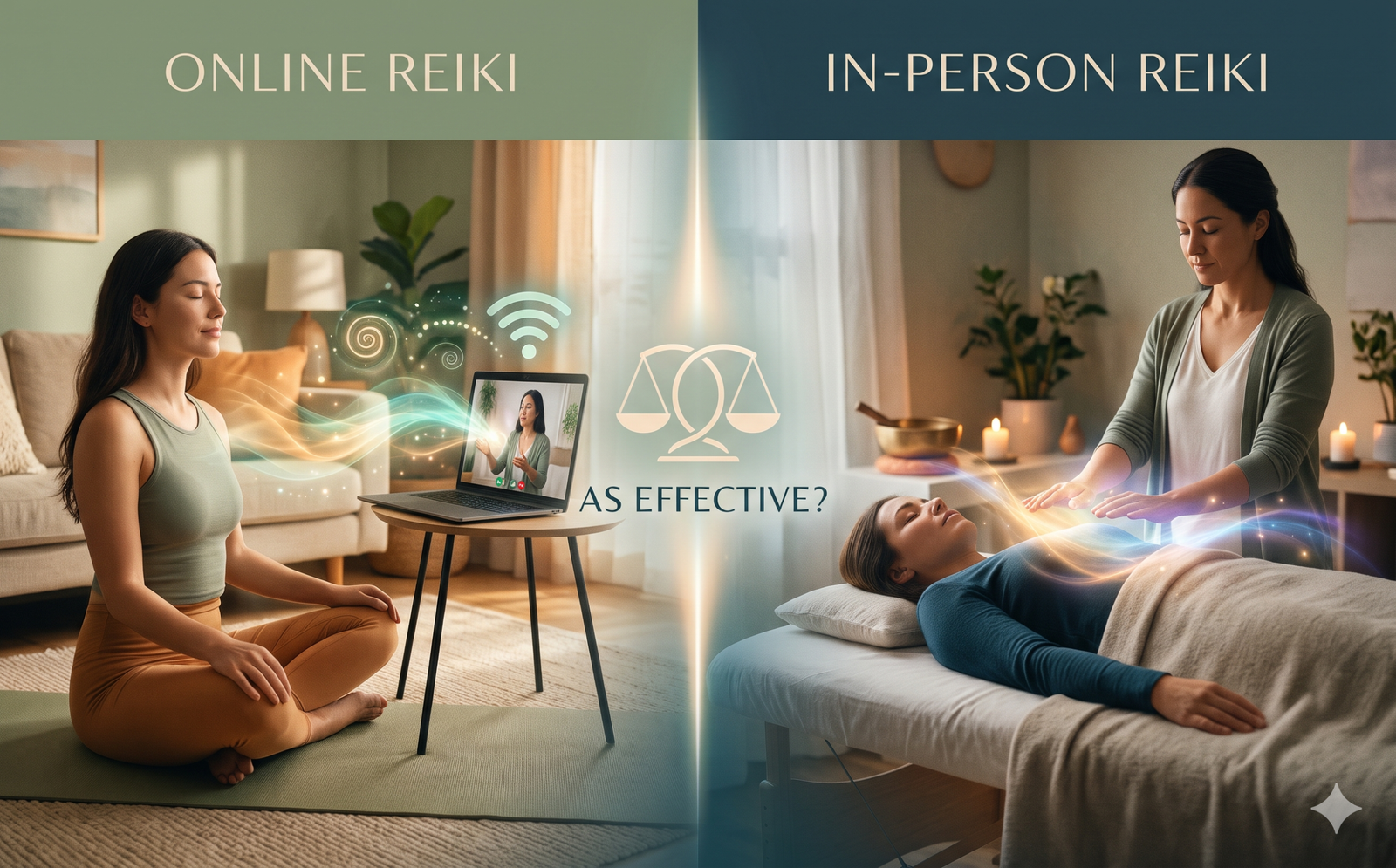
Is online Reiki as good as an in-person session?
Many clients report similar relaxation benefits from online sessions, since the core of the practice doesn’t require physical proximity. It does require a quiet space and your full attention for the hour, the same as it would in person.
If you’re still deciding, the fastest way to get a straight answer is to ask us directly rather than read another article. Message us on WhatsApp with your specific situation and we’ll tell you plainly whether a session is likely to help, instead of just telling you to book one.
Written by Sandeep Jain, Reiki Grand Master and certified hypnotherapist (BSH, GHSC-UK), founder of Blessings Revitalize, offering online Reiki and hypnotherapy sessions across Delhi NCR and India.