
Quick Answer
A Reiki healer worth booking will have documented training at Reiki Master level or above, a lineage they can actually describe, and years of consistent, hands-on practice rather than a single weekend course. They will talk about Reiki as support alongside your existing care, never as a cure, and they will answer direct questions about their training without getting defensive. If a practitioner avoids specifics about where they trained, promises guaranteed results for a named medical condition, or pushes you into buying ten sessions before your first one is even over, treat that as your answer and look elsewhere.
Key Takeaways
- Training level matters more than marketing. Reiki I and II are introductory stages; Master or Teacher level, and beyond that Grand Master, reflects years of deepened practice, not just a certificate on a wall.
- Lineage is traceable. A genuine practitioner can tell you who trained them and which tradition they follow, usually Usui Reiki Ryoho or a close variant of it.
- Guarantees are a warning sign. No ethical healer promises to cure a diagnosed condition, because Reiki is complementary support, not medical treatment.
- The format matters less than the person. Whether a session happens online or in the same room, the vetting questions stay the same.
- Price alone tells you very little. A higher fee doesn’t guarantee more skill, and a very low one isn’t automatically a bargain.
- A short, honest conversation before you book usually tells you more than a polished website ever will.
Why the Practitioner Matters More Than the Technique
Reiki as a system is fairly consistent wherever you encounter it: hand positions, attunements, a shared vocabulary of energy centers and flow. What varies enormously is the person doing it. In the ten-plus years Sandeep Jain has worked with clients across Gurgaon, Noida, and online across India, the single biggest factor in how someone responds to a session has rarely been the technique itself. It’s whether the practitioner actually listens before they start, explains what they’re doing and why, and stays honest about what a session can and can’t realistically change for that particular person’s situation that day.
That’s a frustrating thing to hear if you were hoping for a simple checklist, but it’s also the reason this guide leans so heavily on questions you can ask rather than a single magic credential. Credentials narrow the field. Conversation tells you the rest.
What Reiki Training and Credentials Actually Mean
Reiki training is usually structured in levels. Level I teaches self-practice and basic hand positions. Level II introduces symbols and distance healing technique. Master or Teacher level, sometimes called Reiki III, is where someone has typically put in years of consistent practice and is qualified to attune others. Grand Master is a further, much rarer stage built on that same foundation, usually after a long span of teaching and practicing within a specific lineage.
None of that is regulated the way a medical license is, which is exactly why it matters that you ask rather than assume. A trustworthy practitioner can tell you plainly which level they hold, who attuned them, and roughly how long they’ve been practicing, the way Sandeep can point to his training as a Reiki Grand Master alongside his clinical hypnotherapy qualifications (BSH, GHSC-UK) rather than leaning on vague claims of “years of experience” with no specifics attached. If you’re weighing a hypnotherapist’s qualifications too, the same logic applies almost word for word, and we’ve written a separate, more detailed breakdown of how to vet a hypnotherapist’s certifications in Gurgaon that’s worth reading alongside this one.
Trustworthy Signs vs. Red Flags
| Trustworthy Signs | Red Flags |
|---|---|
| Names their specific training level, teacher, and lineage without hesitation | Speaks only in general terms about “years of training” with no specifics |
| Describes Reiki as complementary support alongside your existing care | Claims Reiki can cure, treat, or replace medical or psychiatric treatment |
| Is upfront about session length, process, and cost before you book | Pressures you into a large package of sessions before your first one ends |
| Welcomes direct questions about their experience and training | Gets defensive or dismissive when asked for specifics |
| Sets realistic expectations, including that results vary person to person | Promises a specific, guaranteed outcome for a named condition |
If you’re ready to experience the difference a properly trained practitioner makes, you can book a Reiki session with Sandeep online and see for yourself how the first conversation alone sets the tone for everything after it.
Does Choosing Online or In-Person Change What You Should Look For?
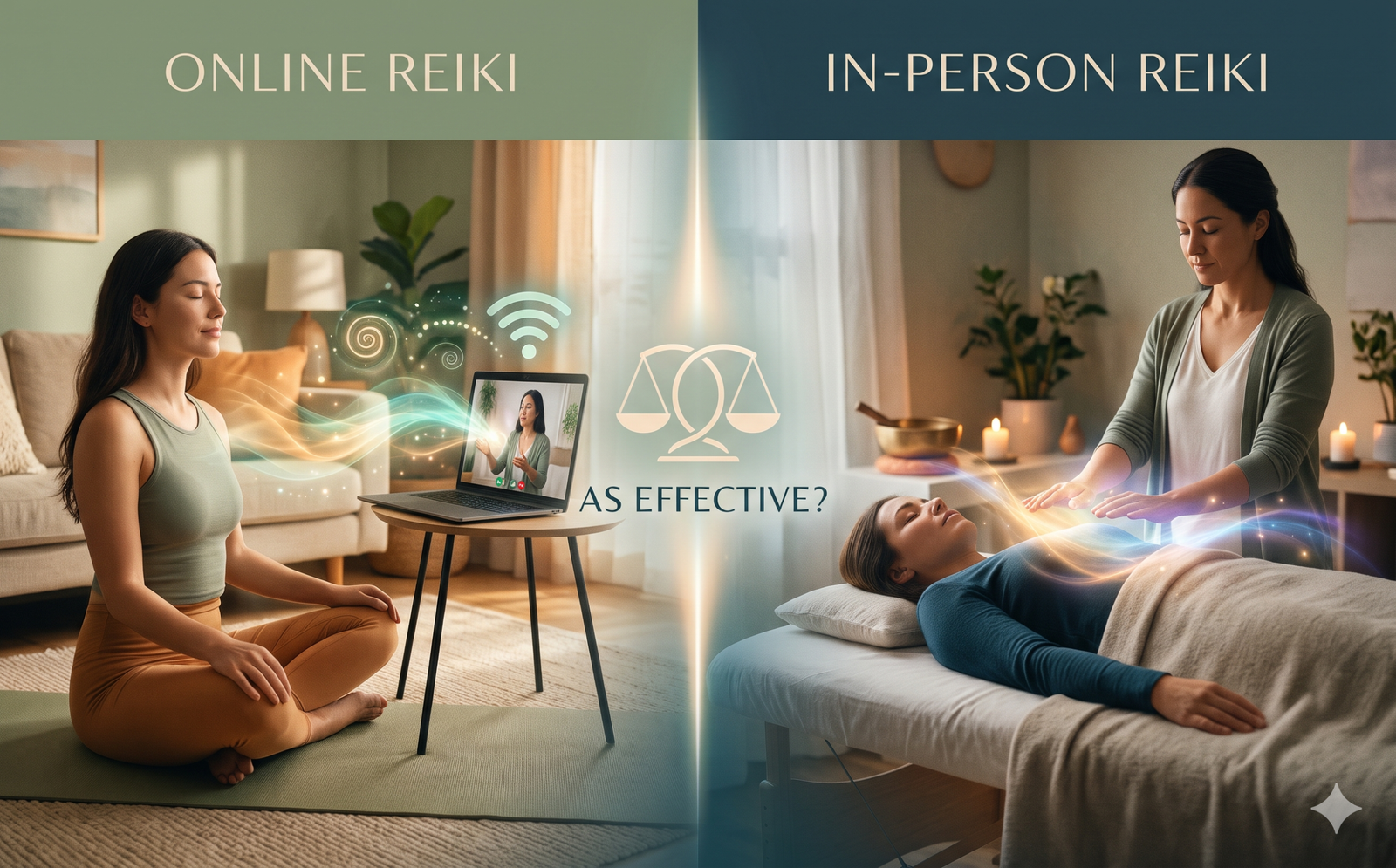
Not really, and that surprises people. The format changes the logistics, not the vetting. We’ve covered the practical trade-offs in detail in our comparison of online Reiki against in-person sessions, but the short version is that a distance session run by a well-trained practitioner tends to outperform an in-person session with someone poorly trained, and the reverse is just as true. What you’re assessing is the person’s training, communication, and honesty about limits, and all three of those come through just as clearly over a video call as they do in a room, which is also why a dedicated online Reiki healing session can genuinely stand on equal footing with an in-person one when the practitioner behind it is properly qualified.
Questions Worth Asking Before You Book
A few minutes of direct questions, usually over a message or a short call, tells you almost everything you need to know:
- What level of Reiki training do you hold, and who trained you?
- Which lineage or tradition do you practice within?
- How long have you been practicing with clients, not just training yourself?
- What should I realistically expect to feel during and after a session?
- Will you tell me if Reiki isn’t the right fit for what I’m dealing with?
- What happens if I need to reschedule or the first session doesn’t feel right?
A practitioner who answers these calmly and specifically, without rushing you toward a decision, has already told you most of what you need to know about working with them.
What Reiki Can Realistically Help With, and the Line We Won’t Cross
People come to Reiki for stress, emotional overwhelm, trouble sleeping, and a general sense of being stuck or drained, and a well-run session can genuinely leave you calmer and more settled, often in a way that’s noticeable within the hour. Some early clinical research has looked at Reiki’s effects on stress markers and self-reported anxiety with encouraging, if still limited, results; the National Center for Complementary and Integrative Health’s overview of Reiki is a fair, independent summary of what the evidence currently does and doesn’t support.
What a session is not, and what no honest practitioner will tell you it is, is a substitute for medical or mental health treatment. Reiki sessions with Sandeep are offered as complementary support alongside, never as a replacement for, care from a qualified doctor or therapist, and any practitioner you consider should say the same thing without you having to ask twice.
Frequently Asked Questions
How do I know if a Reiki healer is actually certified?
Ask them directly which level of training they hold, who trained them, and in which lineage. A real practitioner answers this specifically and without hesitation. If the response stays vague or shifts to talking about results instead, that’s worth noticing.
Is there a difference between a Reiki Master and a Reiki Grand Master?
Yes. Master or Teacher level typically means someone has completed the core training path and can attune others. Grand Master is a further, rarer stage reached after many additional years of practice and teaching within a specific lineage, not a title anyone can self-assign after a short course.
Should I be worried if a Reiki healer promises guaranteed results?
Generally, yes. Responsible practitioners talk in terms of support, tendencies, and what’s commonly reported, not guarantees, especially where a specific medical or psychological condition is involved. A flat promise of a cured outcome is one of the clearer warning signs on this list.
Does a longer session automatically mean better healing?
Not necessarily. Session length should match what you actually need that day, not be stretched to justify a higher price. A practitioner who recommends an appropriate length rather than always upselling the longest option is generally more trustworthy.
Can I ask a Reiki healer for proof of their training?
Yes, and a confident practitioner won’t mind. It’s reasonable to ask for the name of their teacher or training organization, even if formal certificates aren’t something they can forward directly.
What’s a reasonable price range for a Reiki session in India?
It varies by practitioner, session length, and whether it’s a single session or a package, and a higher price doesn’t automatically mean more skilled hands. Rather than anchoring to one number, use the vetting questions above first, and treat cost as one factor among several once you’ve already confirmed the practitioner’s training checks out.
If any of this made you realize you’ve been more cautious about choosing a hairdresser than you have about choosing someone to work on your energy and wellbeing, that’s a fair thing to notice, and it’s an easy one to fix. Message Sandeep directly on WhatsApp with whatever questions from this list matter most to you, and you’ll have a real answer before you ever have to commit to a session.
Written by Sandeep Jain, Reiki Grand Master and certified hypnotherapist (BSH, GHSC-UK), working with clients across Delhi NCR and online throughout India.