
Quick Answer
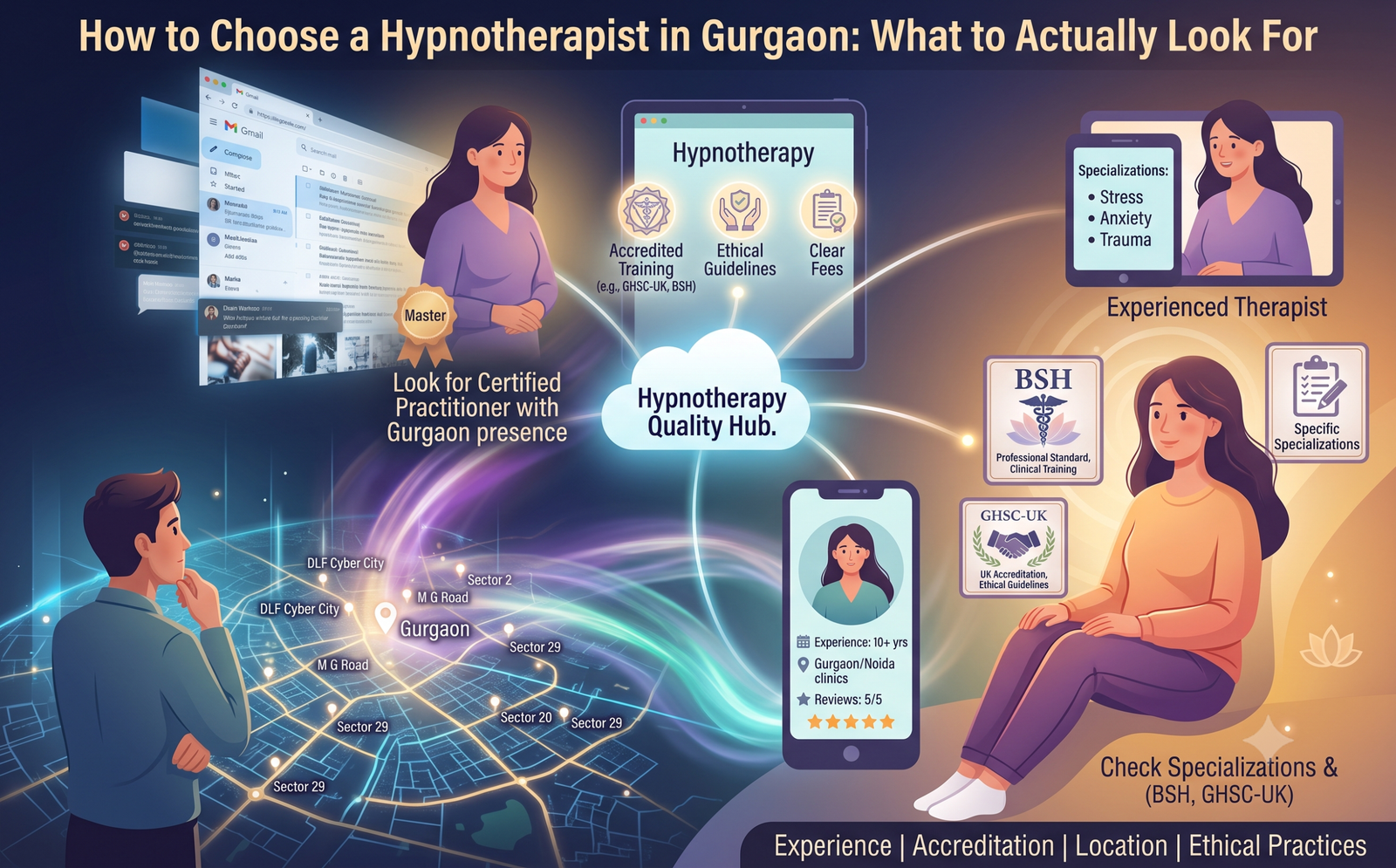
A qualified hypnotherapist in Gurgaon should hold recognized certification from a body like the British Society of Hypnotherapists (BSH) or GHSC-UK, be willing to explain their process in plain language before you book, and ask about your medical and mental health history rather than skipping straight to a session. Look for someone who talks about hypnotherapy as a complementary tool with real limits, not a guaranteed fix. If a practitioner cannot name their training body or promises a cure in one sitting, that is a reason to keep looking.
Key Takeaways
- Recognized certification (BSH, GHSC-UK, or an equivalent body) matters far more than a polished website or a long client list.
- A real intake conversation, covering your history and goals, should happen before any trance work begins.
- Ask directly how many clients they have worked with for your specific concern, not just “how long have you practiced.”
- Guarantees of a cure, or refusal to discuss what hypnotherapy cannot do, are the clearest red flags.
- Price in Gurgaon’s growing wellness market has very little correlation with actual training or outcomes.
- Online sessions from a certified practitioner can work as well as in-person ones for most concerns, so location alone shouldn’t be the deciding factor.
Why “Near Me” Isn’t Enough
Search “hypnotherapist near me” or “hypnotherapist in Gurgaon” and you’ll get a long list. Gurgaon’s wellness scene has grown fast over the last few years, and hypnotherapy has ridden that wave along with everything else. The problem is that “hypnotherapist” isn’t a protected title in India the way “doctor” or “psychologist” is. Anyone can put it on a business card after a weekend course. That doesn’t mean the field is unregulated everywhere, it means the burden of checking falls on you as the client.
What actually separates someone who has done the work from someone who hasn’t usually comes down to three things: where they trained, how they run the first conversation, and how honestly they talk about what hypnotherapy can and can’t do. None of these require you to be an expert yourself. They just require asking the right questions before you hand over a fee.
The Credentials That Actually Matter (and the Ones That Don’t)
In hypnotherapy, training bodies like the British Society of Hypnotherapists (BSH) and the General Hypnotherapy Standards Council (GHSC-UK) set a real bar: supervised practice hours, an actual curriculum, and ongoing standards a practitioner has to keep meeting, not just a certificate you frame once and forget. Sandeep Jain’s own training under BSH and GHSC-UK, alongside his Reiki Grand Master lineage, is the kind of thing worth verifying independently rather than taking on faith, and it’s exactly the kind of background that’s worth checking for any practitioner you’re considering, not just him.
What doesn’t tell you much: the number of Instagram followers, a “certified master” title with no body named behind it, or testimonials with no way to verify they’re real. None of these are necessarily dishonest, but none of them are proof either.
Questions to Ask Before You Book Your First Session
A short call or WhatsApp message before booking tells you more than any website copy. Worth asking directly: which body certified you and for how long, have you worked with someone dealing with my specific concern before, what does a typical first session actually involve, and what results should I realistically expect versus not expect. A practitioner who’s done real training answers these without hesitation, usually in a way that sounds more measured than salesy.
It’s also fair to ask what happens if hypnotherapy doesn’t help with your particular issue. A grounded answer, something like “we’d talk about whether a different approach or a referral makes more sense,” is a good sign. An answer that insists it always works for everyone is not.
Red Flags: When to Walk Away
A few patterns are worth taking seriously. Guarantees of a permanent cure in one or two sessions. Reluctance to discuss your medical history or current medications. Pressure to commit to a long package before your first session even happens. And any suggestion that hypnotherapy should replace ongoing psychiatric or medical treatment rather than work alongside it. None of these automatically mean bad intent, but they’re worth pausing on.
What a Real First Session Actually Feels Like
Clients coming in for the first time usually expect something dramatic, and are a little surprised when it isn’t. A proper first session with Sandeep starts with twenty to thirty minutes of ordinary conversation: what’s been going on, what you’ve already tried, what you’re hoping changes. The hypnosis part itself feels closer to a guided, deeply focused rest than anything theatrical, most people describe it as similar to the drowsy stretch right before falling asleep, fully aware the whole time, able to stop or speak whenever they want. What people notice afterward tends to be smaller than they expected too: a bit less mental noise for a few days, an easier time falling asleep, sometimes a specific memory or association loosening its grip. It builds gradually across sessions rather than resolving in one sitting, which is worth knowing going in so the pace doesn’t feel discouraging.
For those specifically drawn to past-life regression work, the same rules apply, arguably more so, since it’s an area where dramatic claims are common and verification is harder. The intake conversation and the practitioner’s honesty about what the experience can and can’t confirm matter just as much here as for any other concern. Sandeep’s regression exploration sessions are built around that same grounded approach rather than theatrics.
Hypnotherapy is complementary. It isn’t a replacement for medical treatment or ongoing mental health care, and a practitioner worth choosing will say so plainly rather than implying otherwise.
If you want to check any practitioner’s training claims yourself, the certifying bodies themselves are a reasonable starting point, and general background on how hypnotherapy is used clinically is available from sources like the Cleveland Clinic’s overview of hypnotherapy.
If you’d rather just ask someone directly than sort through websites, reach out with your questions before you book, and see how the answers sound. You can also read more about what BSH, GHSC-UK, and Reiki Grand Master actually mean for Sandeep’s own training.
Frequently Asked Questions
How do I verify a hypnotherapist’s certification in India?
Ask which body certified them by name (BSH and GHSC-UK are two established ones) and how long the program was. A legitimate practitioner will tell you without hesitation and won’t mind if you look the body up yourself afterward.
Is hypnotherapy safe if I already have an anxiety diagnosis or take medication for it?
Generally yes, when it’s run by someone properly trained who takes your history seriously, but it should sit alongside your existing treatment rather than replace it. Tell your hypnotherapist about any diagnosis or medication upfront, and keep your doctor or therapist in the loop too.
How many sessions does it usually take to notice a difference?
It varies by person and concern, but most people report some shift after three to five sessions rather than the first one. Anyone promising a permanent fix in a single session is overselling it.
Can hypnotherapy be done online, or does it need to be in person?
Online sessions work well for most concerns and are how many of Sandeep’s clients across Delhi NCR and the rest of India already do it. What matters more than the format is whether the practitioner is properly trained and the conversation before the session feels thorough.
What’s the actual difference between a hypnotherapist and a clinical psychologist?
A clinical psychologist is trained and licensed to diagnose and treat mental health conditions using evidence-based therapy. A hypnotherapist works with focused relaxation techniques to support specific goals like habit change, stress, or processing past experiences, and is complementary to, not a substitute for, clinical mental health care.
Does insurance cover hypnotherapy sessions in India?
Typically no. Most health insurance in India doesn’t cover hypnotherapy or similar complementary wellness services, so it’s usually an out-of-pocket cost. Worth confirming directly with your insurer if you’re unsure.
Written by Sandeep Jain, hypnotherapist and Reiki Grand Master, Blessings Revitalize.