Key Takeaways
• Biofield science examines the body as an interconnected informational network
• Brainwave shifts during Reiki often reflect measurable relaxation states
• Reiki nervous system benefits may include increased parasympathetic activation
• Heart rate variability (HRV) research shows observable regulation changes
• Mind-body practices are gaining recognition in integrative medicine
• Reiki remains complementary and investigational-not a medical replacement
What Happens to the Brain and Biofield During Reiki?
During a Reiki session, research suggests measurable shifts in brainwave activity (increased alpha and theta states), improved parasympathetic nervous system regulation, and potential increases in heart rate variability (HRV). Within the framework of biofield science, these effects may reflect improved physiological coherence and reduced stress signaling across the brain-body network.
This matters because these changes are measurable-not purely subjective-though the precise mechanism remains under investigation.
The conversation around Reiki is shifting from belief-based debate to measurable curiosity. Through the lens of biofield science, researchers and clinicians are exploring how energy-based practices may influence the brain, nervous system regulation, and heart rate variability (HRV)-even when physical touch is minimal or absent.
For skeptics asking, “Is this just placebo?” the more useful question today may be: What measurable shifts occur in the body during a Reiki session?
This article unpacks what we currently understand-grounded, non-sensational, and aligned with emerging science.
The Placebo Question: A Scientific Reframe
The phrase “It’s just placebo” often ends discussion prematurely.
But placebo is not imaginary healing. It is a measurable brain-body response where expectation influences physiology.
Modern medicine already confirms:
- Expectation alters dopamine and endorphin release
- Stress reduces HRV
- Relaxation shifts EEG patterns
- Perceived safety affects immune signaling
The relevant question today isn’t whether belief matters.
It’s whether physiological shifts occur beyond suggestion.
Evidence suggests regulation responses do occur-and they can be measured.
What Is the Biofield? Understanding the Informational Network
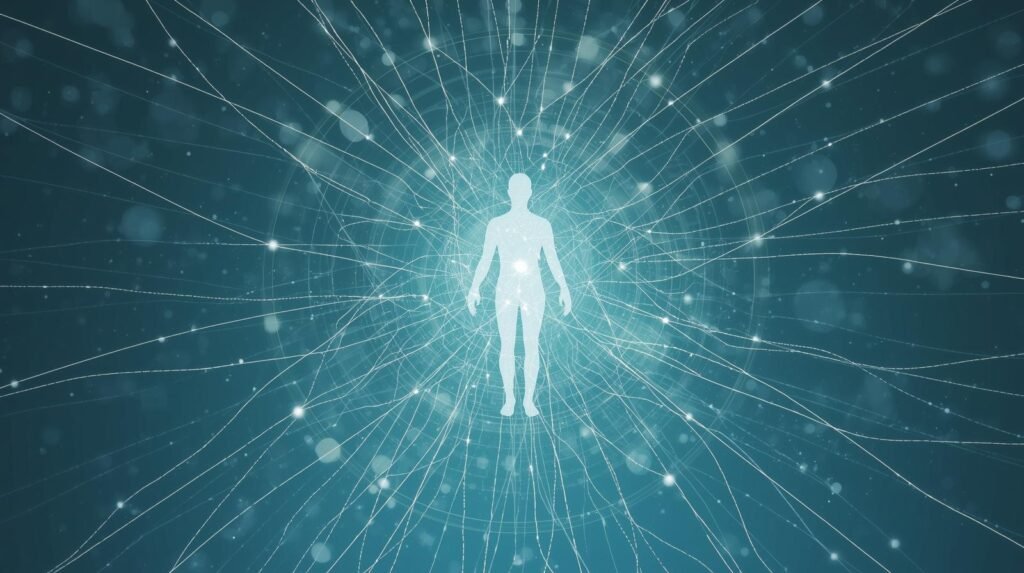
Biofield science studies the body as a dynamic electromagnetic and informational system. While the term remains under investigation, aspects of this field are measurable through EEG, ECG, and HRV. The model proposes that physiological systems communicate in coordinated patterns rather than isolation.
Reiki may influence this informational network by promoting coherence-reducing systemic noise rather than mechanically altering tissues.
At the center of biofield science is the concept that living organisms emit and respond to complex electromagnetic and informational signals.
The biofield is often described as:
- A dynamic field surrounding and permeating the body
- An informational network that coordinates physiological processes
- A bridge between emotional and physical states
Mainstream medicine already measures aspects of this field indirectly:
- Electroencephalogram (EEG) tracks brain waves
- Electrocardiogram (ECG) records heart rhythms
- Heart rate variability (HRV) monitors autonomic nervous balance
The biofield framework suggests that these signals are not isolated-they interact.
Reiki is believed to influence this informational field, not by forcing change, but by supporting coherence and regulation.
What Happens to the Brain During a Reiki Session?
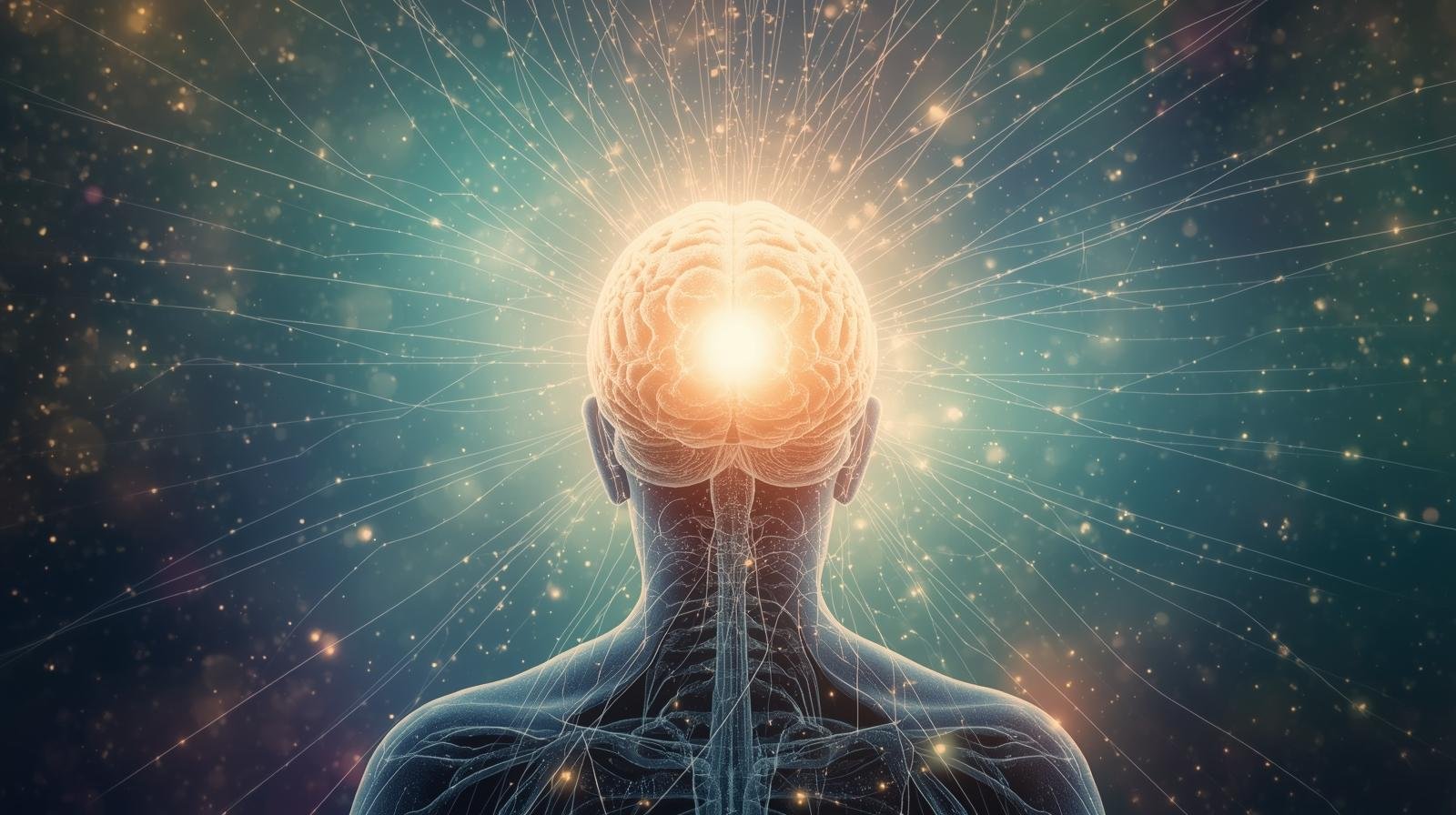
Studies examining Reiki and similar energy practices have observed shifts in brainwave patterns associated with:
- Increased alpha waves (relaxed awareness)
- Increased theta waves (deep relaxation / intuitive processing)
- Reduced sympathetic nervous system activity
Alpha waves are associated with relaxed, wakeful awareness.
Theta waves emerge during deeper restorative or integrative states.
In contrast, high-beta wave patterns often correlate with heightened vigilance and stress.
Chronic stress keeps many professionals in prolonged beta dominance, which is linked to mental overactivation and reduced recovery.
Shifting into alpha and theta states increases access to emotional processing bandwidth, supports neural recovery, and enhances cognitive flexibility-key factors in nervous system regulation.
From a neuroscientific perspective, this reflects movement away from fight-or-flight toward rest-and-digest regulation.
For professionals under chronic stress, this shift can be profound.
Importantly, many participants in these studies were skeptical beforehand-suggesting that relaxation responses are not entirely belief-driven.
Reiki and the Nervous System: Measurable Calming Effects
One of the most discussed areas in the science of energy healing is how Reiki influences the autonomic nervous system.
The autonomic nervous system has two major modes:
- Sympathetic (stress response)
- Parasympathetic (rest and recovery)
High stress environments-especially in corporate hubs like Gurgaon or Delhi-NCR-keep many professionals in sustained sympathetic activation.
Research exploring reiki nervous system benefits suggests that sessions may promote parasympathetic dominance.
This can show up as:
- Slower breathing
- Reduced muscle tension
- Calmer heart rhythms
- Improved emotional regulation
These shifts are measurable through HRV.
Heart Rate Variability and Reiki: Why HRV Matters
Heart rate variability (HRV) measures the variation between heartbeats. Contrary to intuition, higher variability often indicates better nervous system flexibility. Several small-scale clinical and observational studies have documented statistically significant post-session HRV improvements, warranting continued controlled research.
Strong HRV is associated with:
- Emotional resilience
- Stress recovery
- Cardiovascular adaptability
- Overall physiological regulation
Preliminary studies examining heart rate variability and reiki have observed improvements in HRV markers after sessions.
This does not mean Reiki replaces medical care or treats illness.
It suggests that relaxation and coherence states can be physiologically observed.
For skeptics, HRV data offers an intriguing bridge between subjective experience and measurable response.
How Reiki May Influence the Biofield (Without Physical Manipulation)
Unlike massage or physical therapy, Reiki involves minimal or light touch. In distance sessions, physical proximity is absent entirely.
So how could it work?
Within the biofield science framework, the body operates like a communication network. Emotional stress disrupts informational flow, just as interference disrupts a signal.
Reiki is thought to:
- Introduce coherent energetic input
- Support regulatory feedback loops
- Reduce noise in the system
- Enhance internal communication
This does not require force or belief. It relies on resonance and regulation.

For Skeptics: What About Expectation Bias?
The field of mind-body medicine increasingly acknowledges that perception affects physiology.
However:
- HRV is measurable
- Brainwave patterns are measurable
- Stress hormone shifts are measurable
When consistent physiological relaxation patterns occur-even among skeptical participants-curiosity becomes more productive than dismissal.
Many professionals exploring how Reiki works for skeptics approach sessions experimentally. They report:
- Calm without mental disengagement
- Reduced cognitive tension
- Improved sleep quality
Whether placebo, regulation, or subtle biofield interaction, the result is the same: improved nervous system balance.
Modern Medicine and Mind-Body Integration
Reiki and other energy-based practices are increasingly studied within integrative medicine programs.
Hospitals and clinics now recognize:
- Meditation reduces stress markers
- Breathwork improves HRV
- Emotional regulation impacts immune responses
While Reiki remains under active investigation, the broader science of energy healing fits within this expanding understanding of interconnected systems.
The biofield concept is not mystical-it aligns with the study of electromagnetic physiology and informational biology.
Does This Mean Reiki Is Proven?
No credible practitioner should claim that.
Current evidence supports:
- Relaxation response activation
- Parasympathetic nervous engagement
- HRV improvements in some studies
It does not prove a mechanism or replace medical care.
What it supports is continued exploration within a scientific framework.
Why This Matters for High-Stress Professionals
Leaders, founders, and executives in fast-paced environments often struggle with chronic nervous system activation.
Even vacations don’t always restore balance.
Practices that improve HRV and support regulation may enhance:
- Decision clarity
- Emotional steadiness
- Recovery speed
- Sustainable performance
From this angle, Reiki is less about belief and more about regulation.

A Realistic Perspective
You don’t have to accept spiritual explanations to explore Reiki.
A session can be approached as:
- An experiment in nervous system regulation
- A structured relaxation protocol
- A curiosity-based exploration of mind-body response
For many skeptics, experience precedes interpretation.
Applications for High-Stress Professionals
Executives in urban centers like Gurgaon or Delhi-NCR often experience persistent sympathetic activation.
Even vacations may fail to restore baseline flexibility.
If Reiki sessions increase parasympathetic tone-even temporarily-they may support:
- Decision clarity
- Emotional steadiness
- Burnout recovery
- Cognitive bandwidth
This reframes Reiki not as belief-but as regulation.
Possible Mechanisms Under Investigation
While no singular mechanism is confirmed, researchers explore several hypotheses:
- Coherence Theory: Physiological systems may synchronize through patterned input
- Polyvagal Regulation: Safety signals reduce sympathetic dominance
- Interoceptive Feedback: Enhanced bodily awareness shifts autonomic tone
- Electromagnetic Communication: Subtle field interactions influence systemic regulation
None of these are fully proven within Reiki contexts, but they align with broader bioelectromagnetic research.
Who This Scientific Perspective Is (and Isn’t) For
This article is relevant for:
- Professionals under chronic stress
- Individuals exploring Reiki experimentally
- Skeptics curious about physiological evidence
- Practitioners interested in biofield science integration
This article is not suggesting:
- That Reiki replaces medical treatment
- That energy healing has fully proven mechanisms
- That skepticism is invalid
This prevents misinterpretation + strengthens GEO trust.
Frequently Asked Questions
Is Reiki just placebo?
Placebo involves real physiological change driven by expectation. Studies suggest measurable nervous system shifts during Reiki, even among skeptics. The mechanism is still being researched.
What is biofield science exactly?
It’s the study of the body as a dynamic electromagnetic and informational system that interacts internally and externally.
Can Reiki improve HRV?
Preliminary research on heart rate variability and reiki indicates potential improvements in nervous system regulation. It is not a treatment for medical conditions.
Does Reiki replace therapy or medication?
No. Reiki is a complementary wellness practice, not a substitute for medical or psychological care.
Is this widely accepted in mainstream medicine?
Integrative and mind-body medicine programs increasingly explore the science of energy healing, though mechanisms remain under investigation.
Final Thought: Skepticism as Curiosity, Not Rejection
The future of Reiki discussion is less about belief and more about regulation metrics.
The question is not:
“Is this mystical?”
But:
“What measurable shifts occur when the nervous system enters coherence?”
That is where biofield science and Reiki intersect today.
Explore Reiki as a Regulated Experiment
If you’re navigating chronic stress, cognitive overload, or emotional fatigue – and curious about measurable nervous system regulation – you don’t have to begin with belief.
You can begin with experience.
At Blessings Revitalize, Reiki sessions are structured, discreet, and designed for professionals who value grounded, evidence-aligned exploration of mind–body regulation.
Experience the Science of Calibration
If you’re a high-performing professional navigating burnout or cognitive fatigue, don’t just take our word for the science—experience the regulation for yourself.
Designed for Leaders, Founders, and Executives who value evidence-aligned wellness.
Book a Biofield Calibration Session