
QUICK ANSWER
Hypnotherapy is safe for most adults when it is led by a trained practitioner, because you stay conscious and in control the entire time, you are never “under someone’s power,” and you can stop a session whenever you want. The real risks are smaller and more specific than people assume: it is not a good fit for a handful of medical and psychiatric conditions, and unsupervised self-hypnosis apps or recordings carry different risks than a guided, in-person or live online session does. Done properly, with a practitioner who asks about your health history first, hypnotherapy is one of the gentler complementary approaches available for stress, habits, and old patterns that talk therapy alone hasn’t shifted.
KEY TAKEAWAYS
- You remain aware and able to speak or stop throughout a hypnotherapy session. It is a focused, relaxed state, not sleep or loss of control.
- A small group of people, mainly those with psychosis, certain dissociative disorders, or severe untreated mental illness, should only try hypnotherapy under a psychiatrist’s direct supervision, if at all.
- Mild grogginess, a few tears, or feeling unusually tired for the rest of the day are normal and pass quickly. Confusion that lingers for days is not, and is worth mentioning to the practitioner.
- Credentials matter more in hypnotherapy than in most wellness fields, since the term itself isn’t tightly regulated in India. Ask what training body certified your practitioner.
- Hypnotherapy works alongside medical and mental health care, not instead of it. It should never replace medication, therapy, or a diagnosis from a qualified professional.
I get this question almost every week from someone who read one too many forum thread about hypnotherapy being “mind control,” and honestly, I don’t blame them. The word itself does a lot of damage. Stage hypnosis shows people clucking like chickens, and that image sticks. Clinical hypnotherapy is a completely different animal, and once you’ve actually sat through a session, most people are surprised by how ordinary it feels. You’re not asleep. You’re not unconscious. You’re closer to that state right before you drift off at night, aware enough to notice a dog barking outside but relaxed enough that your usual mental chatter quiets down.
That distinction is where safety actually lives. A person in a hypnotic state can refuse a suggestion, open their eyes, or simply decide the session is over. Research reviewed by the American Psychological Association on clinical hypnosis supports this: it describes hypnosis as a state of focused attention in which the person retains the ability to accept or reject what’s being suggested, not a state where control is handed over to someone else. That single fact answers most of the fear-based questions I hear.
Who should be cautious about hypnotherapy
I’d rather tell you the honest limits than oversell this. Hypnotherapy isn’t recommended, or needs much closer medical supervision, for a short list of situations: active psychosis, schizophrenia, severe dissociative identity disorder, epilepsy that isn’t well controlled, and some personality disorders where a destabilized sense of self is already a risk. If you’re currently under a psychiatrist’s care for any of these, hypnotherapy is a conversation to have with that doctor first, not something to book on your own. If you’re still deciding whether hypnotherapy or a different kind of support fits your situation better, our piece on hypnotherapy compared with conventional therapy walks through that choice in more detail.
Pregnancy, mild to moderate anxiety, insomnia, habit change, past-life curiosity, and ordinary stress don’t fall into that category. Those are the situations where hypnotherapy tends to be genuinely low-risk and, for a lot of people, surprisingly effective at reaching patterns that logic and willpower haven’t touched. We also use hypnosis as the delivery method for guided regression exploration, which follows the same safety screening as any other hypnotherapy session.
Is hypnotherapy regulated? What credentials actually mean here
This is the part people skip, and it’s the part that matters most. In India, and in most countries, “hypnotherapist” isn’t a protected title the way “psychiatrist” or “physician” is. Anyone can print a business card. That doesn’t mean hypnotherapy itself is unsafe, it means the burden is on you to check who you’re booking with.
Sandeep Jain trained through the British School of Hypnosis (BSH) and holds certification from the General Hypnotherapy Standards Council UK (GHSC-UK), alongside Reiki Grand Master training. Those two letters, BSH and GHSC-UK, aren’t decoration. They mean the training covered contraindications, how to screen a client before a session, and when to refer someone out to a doctor or psychiatrist instead of proceeding. A practitioner without that kind of structured training might mean well and still miss a warning sign that a trained one wouldn’t.
Before you book anywhere, not just here, ask three things: what body certified them, how long the training ran, and whether they ask about your medical and mental health history before a session. A real practitioner will have a clear answer to all three without hesitating.
Supervised hypnotherapy vs. self-hypnosis apps: the difference that actually matters
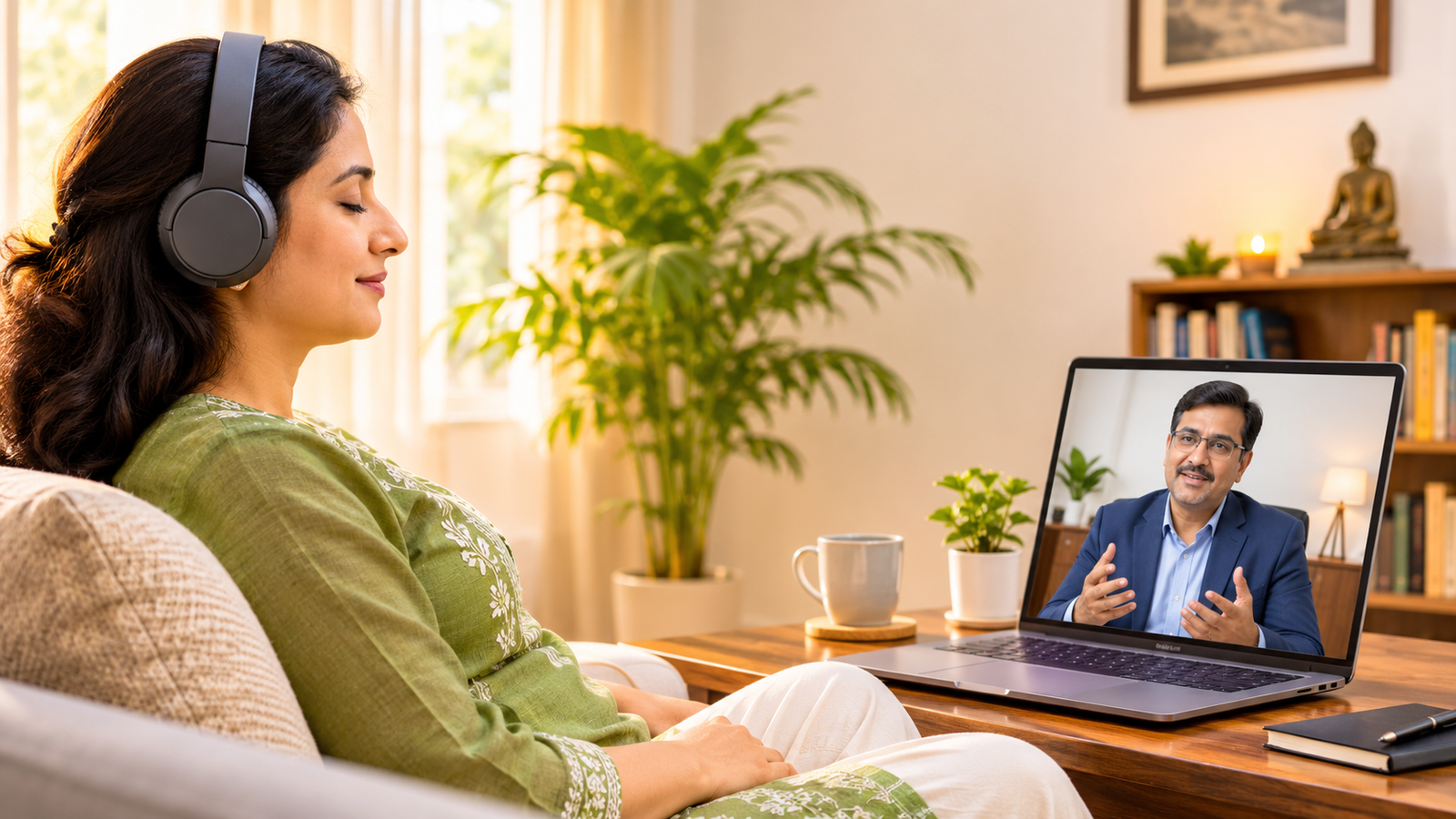
A lot of the safety conversation online conflates two very different things. A guided session with a trained practitioner, whether in person or live online, involves someone actively watching how you respond and adjusting in real time. If you become distressed, they notice and change course immediately.
A pre-recorded self-hypnosis track or an app has no idea what’s happening on your end. For gentle, low-stakes goals like better sleep or a calmer commute, that’s usually fine. For anything touching trauma, grief, or a diagnosed mental health condition, it’s a meaningfully different risk profile, because nobody is there to catch it if the content triggers something unexpected. This is the trade-off worth weighing honestly: apps are cheaper and more private, but they trade away the one safety mechanism, a trained person watching your reactions, that makes supervised hypnotherapy the safer default for anything emotionally heavier than habit change. We get asked the Reiki version of this same safety question often enough that we wrote a companion piece on whether Reiki is safe, if you’re weighing both modalities at once.
If you’re trying to decide which path fits your situation, that’s exactly what an initial conversation before booking is for.
You can book an online session and we’ll talk through whether a guided format or something gentler makes more sense before anything is scheduled.
What a genuinely safe session actually looks like
A responsible first session starts before you’re anywhere near a relaxed state. It starts with questions. What brought you here, what’s your health history, have you ever had a panic attack, are you on any medication that affects your nervous system. Only after that does the actual induction begin, and even then, it’s a gradual, verbal process, nothing sudden, nothing that removes your sense of what’s happening around you.
Afterward, most people describe feeling loose, a little emotional sometimes, and unusually clear-headed, similar to how you feel after a good cry or a long walk. Mild grogginess for an hour or two is common. A headache that fades by evening is common. What isn’t normal is confusion that lasts into the next day, or a sense of detachment from yourself that doesn’t lift. If either of those happens, tell the practitioner directly and loop in your doctor if it continues.
One honest caveat, stated plainly because this is health-adjacent work and deserves to be said without hedging: hypnotherapy is complementary support alongside medical and mental health treatment, never a replacement for it. If you’re managing a diagnosed condition, keep your doctor or therapist in the loop rather than substituting one for the other.
Frequently asked questions
Can hypnotherapy make me do something against my will?
No. You remain aware and in control throughout the session. A trained practitioner cannot make you act against your own judgment, and you can end a session at any point simply by opening your eyes or speaking up.
Is there an age limit for hypnotherapy?
Most reputable practitioners work with adults and older teens, usually with a parent informed and involved for anyone under 18. Younger children are generally not suitable candidates for formal hypnotherapy.
Can hypnotherapy be done safely online instead of in person?
Yes, for most situations. A live, guided online session still has a trained practitioner watching your responses in real time, which is the part that actually matters for safety. It’s a different experience from a pre-recorded track, closer to an in-person session than to an app.
Will I remember what happens during the session?
Almost everyone remembers the session clearly afterward. Full amnesia is rare and mostly a stage-hypnosis myth, not a clinical one.
How many sessions does it take before it’s considered safe to judge whether it’s working?
Most practitioners suggest three to four sessions before evaluating progress honestly, since the first session is often as much about building trust and comfort as it is about the work itself.
If you’ve read this far and you’re still weighing whether hypnotherapy is the right next step, that’s a perfectly reasonable place to be. Reach out through our contact page and we’ll answer your specific questions honestly before you commit to anything, including telling you if it isn’t the right fit.
Written with input from Sandeep Jain, a BSH and GHSC-UK certified hypnotherapist and Reiki Grand Master who has worked with clients across Delhi NCR and online across India for over a decade.