Quick Answer
Reiki and other energy healing sessions help some people sleep better by slowing down an overactive nervous system, the same system that keeps a mind spinning through tomorrow’s problems at 1 a.m. Sandeep Jain, who runs Blessings Revitalize and works with clients across India online, sees the clearest results with sleep trouble that’s tied to stress or a racing mind rather than a diagnosed sleep disorder. Most people notice they feel calmer the same evening, but a real change in sleep quality usually takes two or three sessions, not one. It isn’t a treatment for insomnia or sleep apnea, and anyone dealing with a diagnosed sleep condition should keep working with their doctor alongside it.
Key Takeaways
- Reiki works through the nervous system, so it tends to help sleep problems rooted in stress or a busy mind more than a diagnosed medical sleep disorder.
- Most clients feel calmer right after a session, but a real shift in sleep quality usually shows up after two or three sessions.
- A typical online session runs about 45 to 60 minutes, and it’s common for clients to doze off partway through.
- Energy healing works best alongside basic sleep habits, not as a replacement for them.
- It isn’t a substitute for medical treatment of insomnia, sleep apnea, or other diagnosed conditions.
- The habits behind bad sleep, like phone scrolling at midnight or a mind that won’t switch off, often ease once the stress response underneath them calms down.
Why Can’t I Sleep Even Though I’m Completely Exhausted?
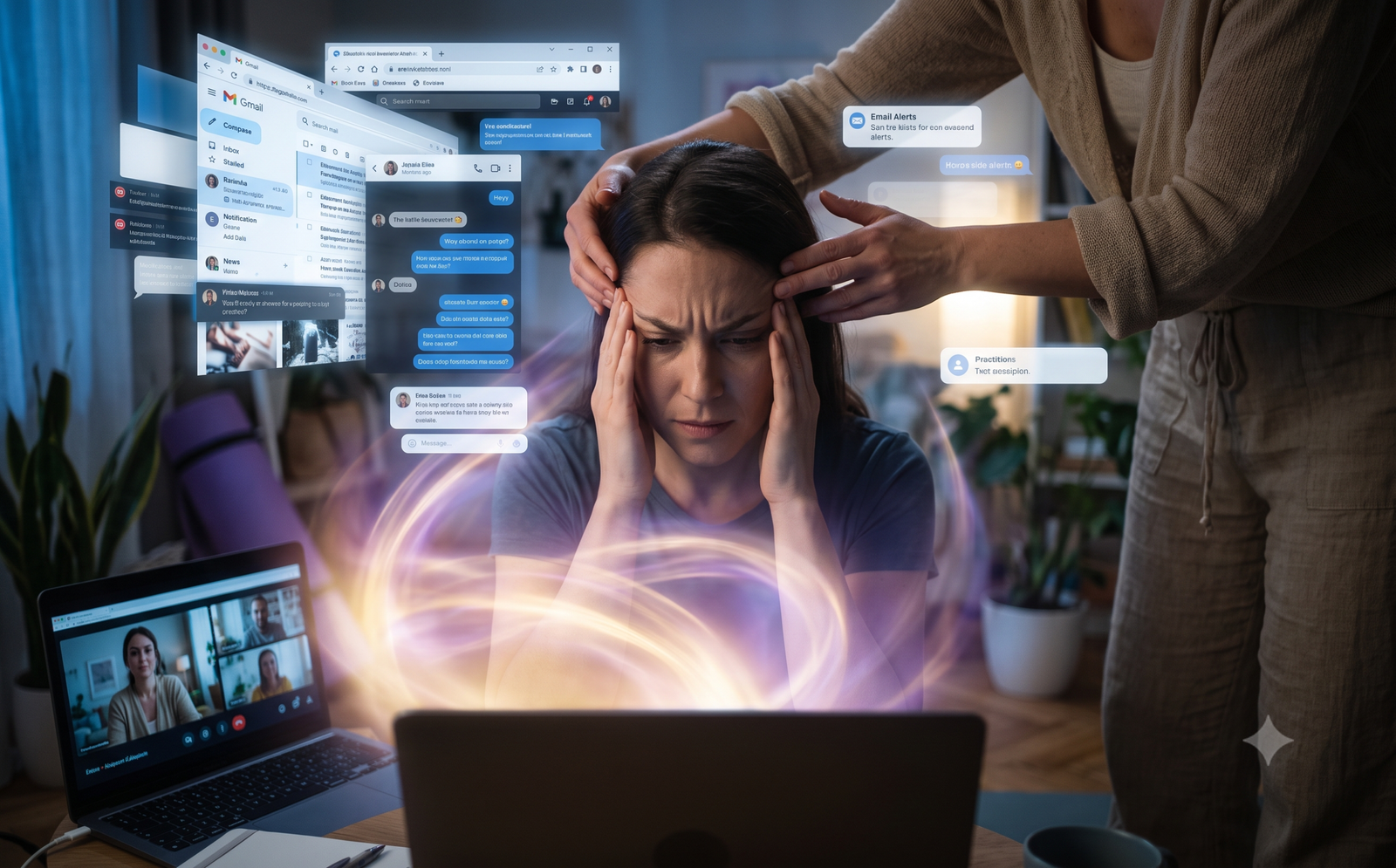
Being tired and being able to sleep are two different things, and a lot of the clients who come to Sandeep for sleep issues already know this the hard way. Their body is worn out, but their nervous system is still running the day’s meeting, the argument from the afternoon, or next week’s deadline on a loop. That’s a stress response, not a sleep problem on its own, and it’s the same mechanism behind how Reiki addresses anxiety and emotional overwhelm. A mind that won’t stop checking for threats doesn’t get permission to rest, even at 2 a.m.
Reiki works on this directly. During a session the body tends to shift out of that alert state, and clients often describe their shoulders dropping, their breathing slowing down, and a kind of heaviness settling in that they associate with being properly tired rather than just wired and tired.
What Actually Happens in a Reiki Session for Sleep?
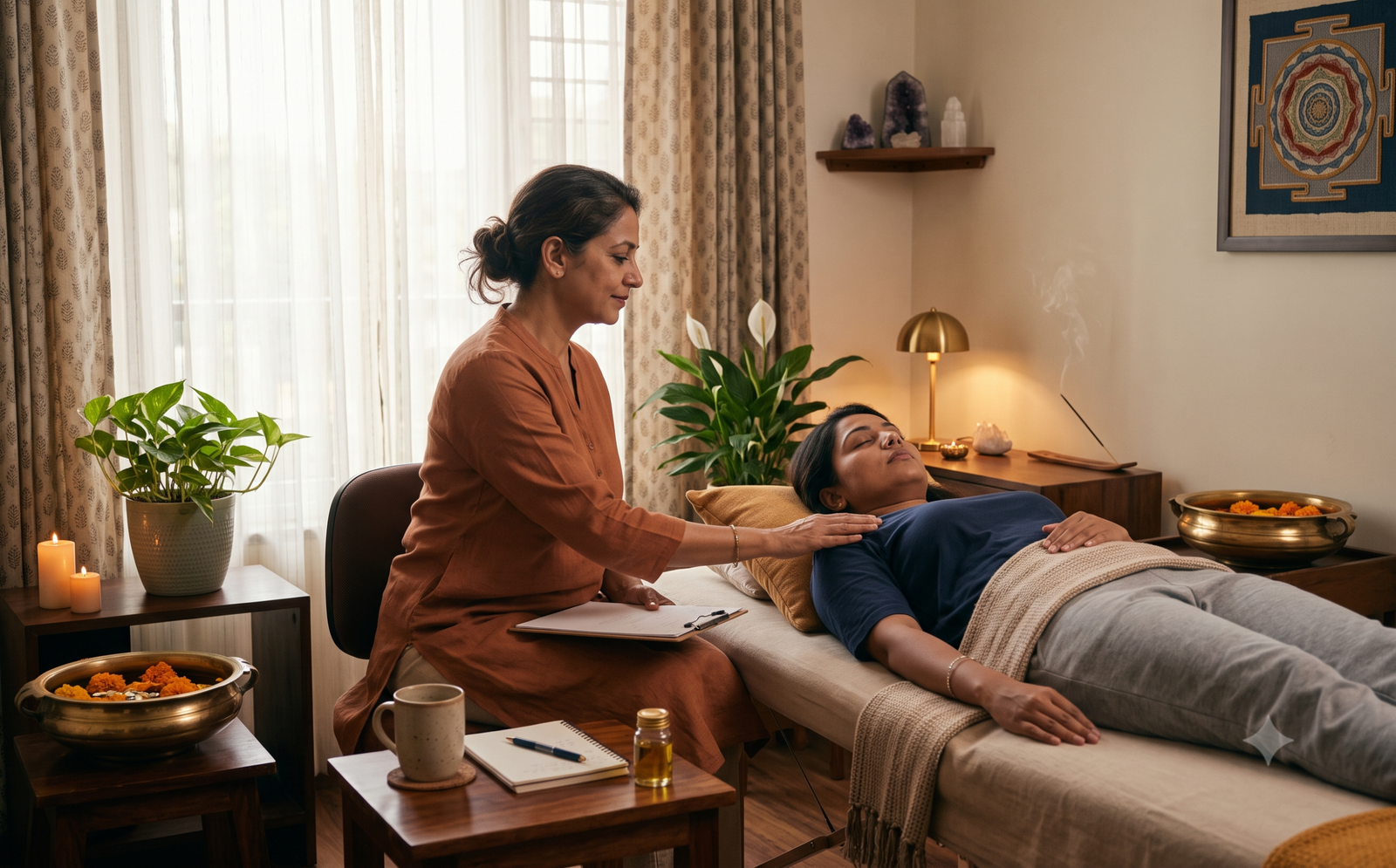
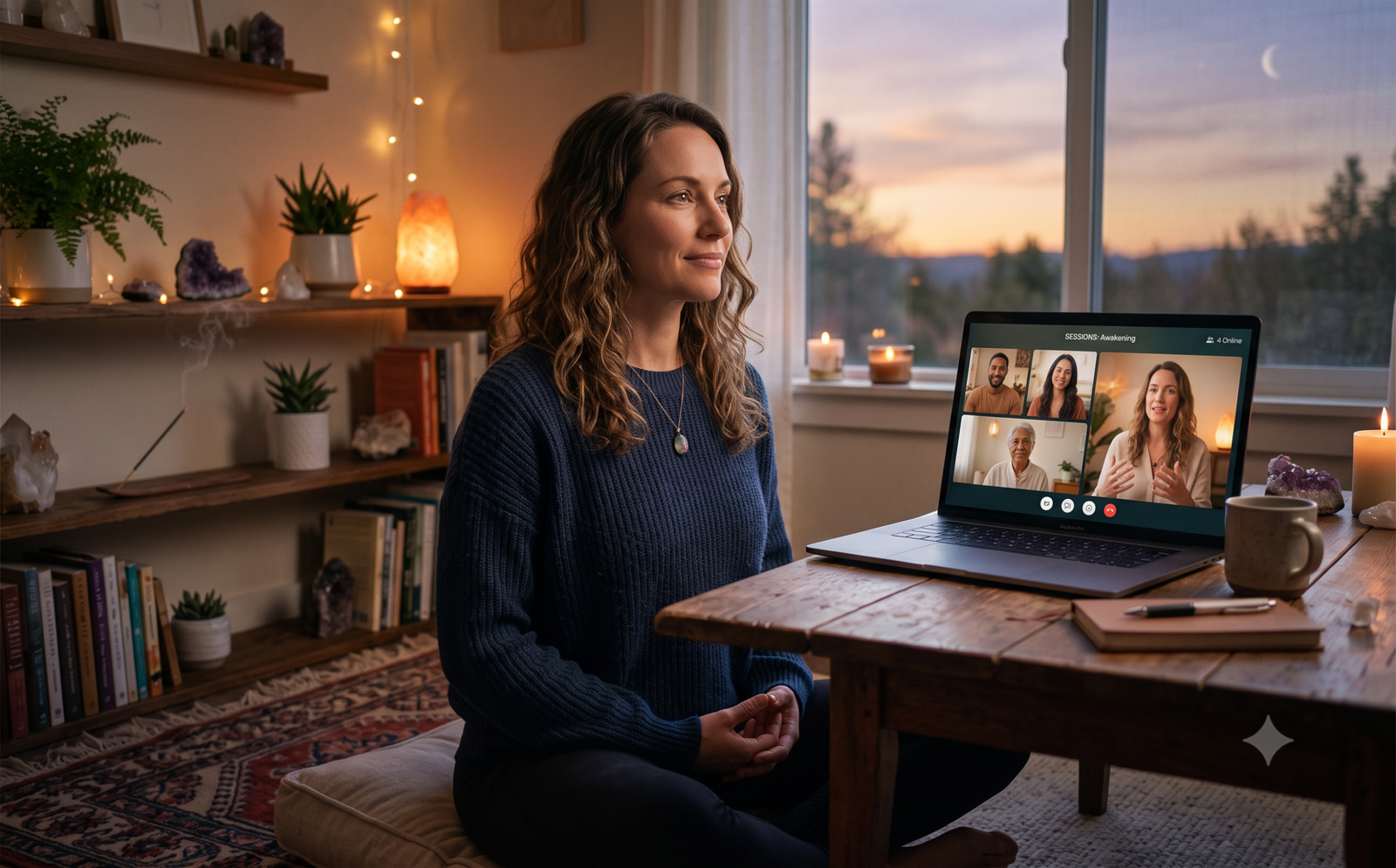
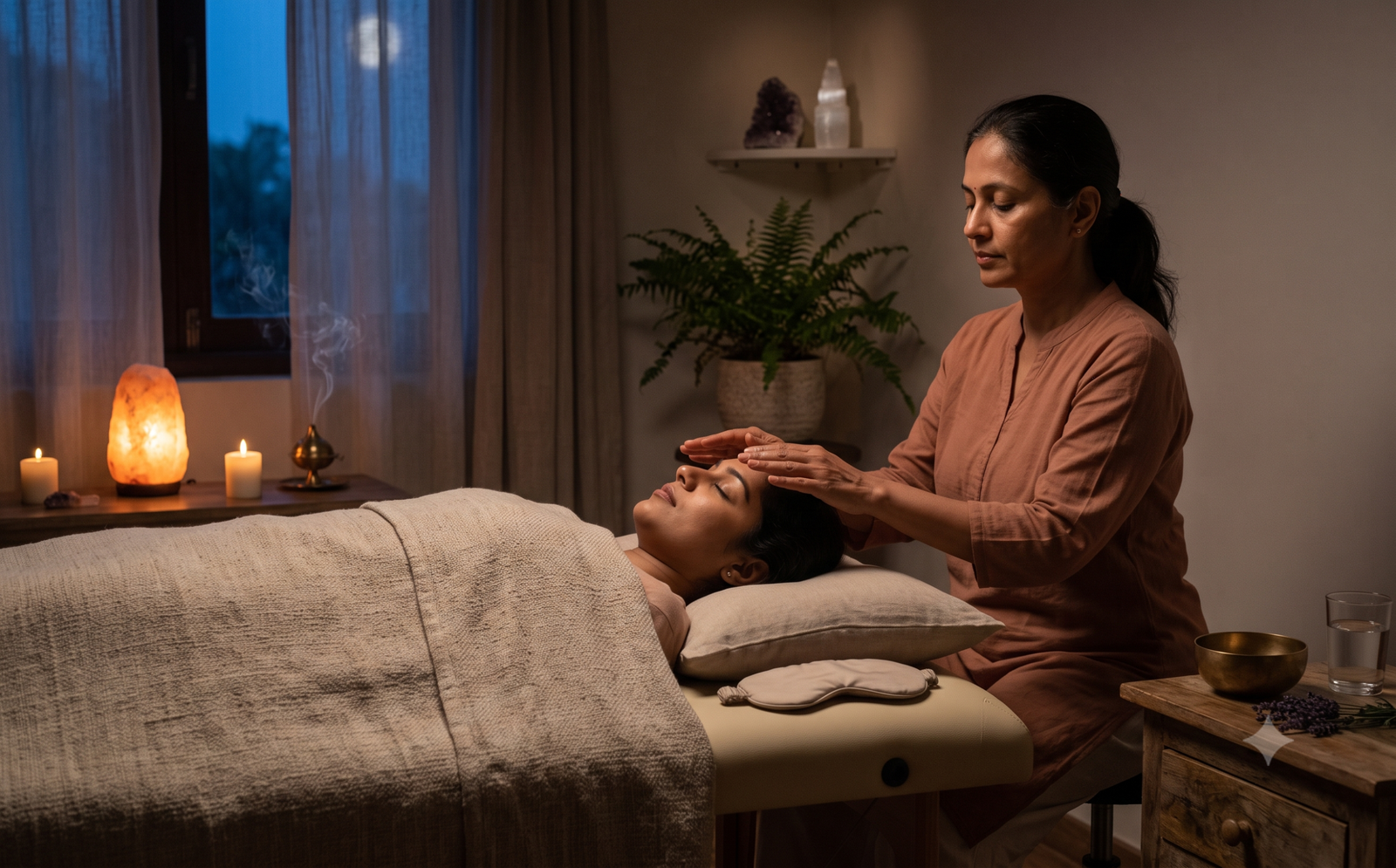
A session for sleep looks almost identical to any other Reiki session at Blessings Revitalize, which is part of why it works as well for sleep as it does for general stress. Sessions run online over video, with the client lying down somewhere comfortable at home rather than sitting upright at a desk. Sandeep works with the energy field around the head, shoulders, and torso for roughly 45 to 60 minutes, checking in briefly at a few points to ask what the client is noticing.
It’s genuinely common for someone to fall asleep around the twenty-minute mark and wake up near the end feeling disoriented in a good way, the way you feel after an unplanned nap that actually helped. Clients who stay awake through the whole thing usually report warmth, a tingling in the hands or feet, or just a noticeable drop in the mental noise they walked in with. Anyone curious about what the body does during a session more broadly, not just for sleep, can see the seven signs your energy is blocked for a wider picture of how this shows up physically.
How Many Sessions Before You Notice a Real Difference?
One session can take the edge off a rough week, but it rarely rewires a sleep pattern that’s been broken for months. Sandeep tells most new clients to expect the real shift by the second or third session, once the body has had a few chances to practice dropping out of alert mode instead of just visiting it once.
People dealing with occasional stress-related sleeplessness, the kind triggered by a specific deadline or a hard month, tend to notice a difference faster than people whose sleep has been poor for years. That second group usually also has more going on underneath it, so if there’s no change at all after four or five sessions, that’s a signal to loop in a doctor rather than keep booking more sessions and hoping.
Can Energy Healing Replace Sleep Medication or Insomnia Treatment?
No, and it shouldn’t be used that way. Reiki and hypnotherapy are complementary practices, not medical treatment, and Blessings Revitalize doesn’t position them as a cure for insomnia, sleep apnea, or any diagnosed sleep disorder. If sleep medication has been prescribed, the right move is to keep taking it as directed and talk to the prescribing doctor before changing anything, not to swap it out for an energy healing session.
What Reiki can realistically do is work on the stress and overactive nervous system that often sits underneath poor sleep, which for a lot of people is the piece that medication alone doesn’t fully address. The two aren’t competing with each other. For most clients, they work better side by side than either one does alone.
Simple Habits That Make This Work Better
Energy healing gets more effective when the hour or two before bed stops working against it, which is really a behavior question more than an energy one. Keeping the phone out of bed, dimming the lights earlier than feels necessary, and giving the body a consistent wind-down cue, even something as small as the same cup of tea every night, all make it easier for a Reiki session’s effects to actually stick.
Sandeep covers this as part of the broader Behavioral & Physical Well-Being work at Blessings Revitalize, since sleep rarely improves from one lever alone. A client who gets a calming session but then scrolls their phone in bed until midnight is undoing a good chunk of what the session did. If sleep trouble is wrapped up with something you’re already sitting with, it’s worth messaging first rather than guessing. You can reach Sandeep directly on WhatsApp to talk through whether this fits your situation before booking anything.
Frequently Asked Questions
Does Reiki actually make you fall asleep during the session?
Often, yes, though it’s not the goal and it doesn’t happen for everyone. Falling asleep mid-session is usually a sign the nervous system finally got permission to switch off, and most clients wake up feeling more rested than a regular nap would leave them, not groggy.
Can energy healing help with insomnia specifically?
It can help with stress-related sleeplessness, the kind caused by an overactive mind or a long stretch of pressure, more reliably than it helps with a clinically diagnosed insomnia disorder. Anyone with a formal insomnia diagnosis should treat Reiki as a support alongside their doctor’s plan, not a replacement for it.
How is this different from meditating before bed?
Meditation is something you do yourself, and it takes practice to get good at quieting your own mind. In a Reiki session, Sandeep is actively working with your energy field while you simply lie there, which is why people who’ve tried and struggled with meditation for sleep often find a guided session easier to get something out of.
Is an online session really as effective as an in-person one for sleep problems?
Distance doesn’t appear to limit the effect, based on what clients report back after online sessions versus the handful who’ve done both formats. What matters more is being somewhere quiet and comfortable during the session, ideally lying down in your own bed or on a couch, since that’s closer to the environment you’re actually trying to improve.
What if I don’t feel anything during the session?
That happens, and it doesn’t mean the session didn’t work. Some clients notice obvious sensations like warmth or heaviness, and others only notice the effect later that night when they fall asleep faster than usual. Sandeep usually asks new clients to judge the session by that night’s sleep rather than by what they felt in the moment.
Is there research behind using relaxation-based practices like this for sleep?
There’s a reasonable body of research on relaxation techniques generally reducing the time it takes to fall asleep and improving perceived sleep quality, which is the mechanism Reiki is working through, even though Reiki itself hasn’t been studied as rigorously as techniques like progressive muscle relaxation. The National Center for Complementary and Integrative Health has a plain-language overview of what’s actually been studied in this space if you want to look at the evidence directly.
Written by Sandeep Jain, founder of Blessings Revitalize, a BSH and GHSC-UK certified hypnotherapist and Reiki Grand Master working with clients across Delhi NCR and online across India.